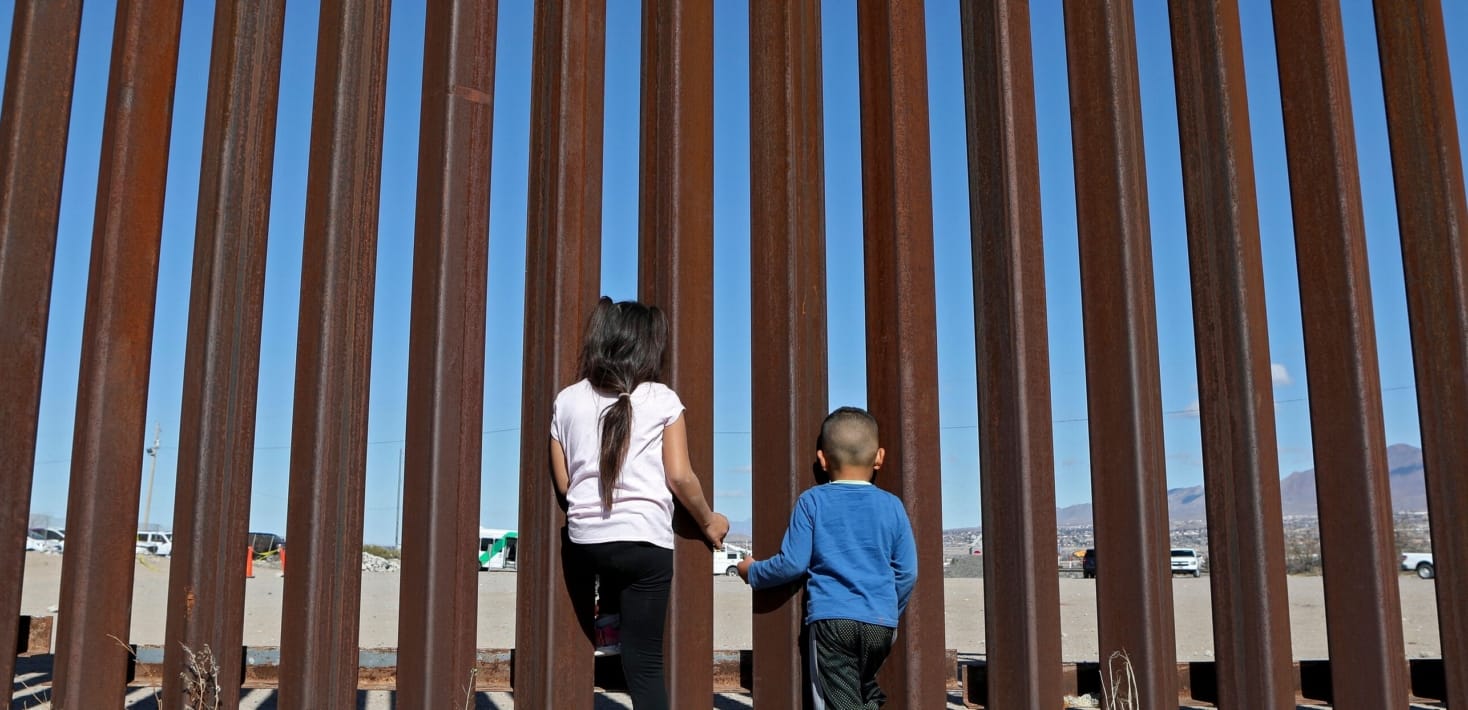
How does systemic racism influence migration policies, asylum systems and border enforcement?
Borders are not simply lines on a map or physical barriers separating one place from another. They are a complex infrastructure of control, social ordering and exclusion shaped by racial hierarchies rooted in histories of colonialism, slavery and other forms of oppression such as patriarchy. Experts talk about “racial borders”, referring to the ways migration policies, asylum systems, and border enforcement reproduce systemic racism and racial discrimination.
These systems are used to create and enforce illegality and vulnerability. This includes who is ‘in’ or ‘out’, who should be treated with suspicion, who should be scapegoated during a crisis, who should be denied movement and who is disposable.
In modern border regimes, white people are privileged over racialized people who are excluded, often violently.
How are borders shaped or influenced by colonialism?
During colonial times, borders were shaped, imposed or influenced in ways that reflected and reinforced colonial power dynamics and ideologies, establishing and globalizing white supremacy and constructing racial hierarchies.
The Berlin Conference of 1884-1885, for example, established rules for the colonization of Africa and divided up vast territory between European powers with complete disregard of the continent’s indigenous populations. During the same period, passports and visa systems were created as basic systems of mobility control, to identify foreigners, limit their ability to travel and manage the use of migrant labour.
How is that reflected in migration systems today?
Today’s migration policies and practices reproduce biases developed during colonial times, for example the idea that colonists can travel freely between their country of origin and its colonies, while colonised people can’t. Colonised people can only travel to the colonial country to provide it with cheap labour.
These biases are reproduced in contemporary migration policies, as nationals of Global North countries can travel more easily and widely than nationals of Global South countries – and with more favourable visa conditions.
Amnesty International has exposed visa policies in several countries that intend to allow cheap labour from Global South countries but in fact expose racialised migrant workers to labour exploitation and other human rights violations.
What does the term “digital racial borders” refer to?
According to E. Tendayi Achiume, former United Nations Special Rapporteur on contemporary forms of racism, racial discrimination, xenophobia and related intolerance, the term “digital racial borders” refers to the ways digital technologies deployed in asylum and migration contexts help entrench racial inequalities and racial harm.
Digital technology is increasingly shaping and delivering migration and asylum policies, from electronic monitoring, satellites, and drones to facial recognition, algorithmic decision-making in visa processes, “lie detectors” and iris scanning. The growth of digital technologies and so-called “smart border” technology have created new partnerships between governments and companies, and with them a range of threats to human rights. Racism is deeply ingrained within migration and asylum systems, so these technologies risk exacerbating racial biases and discrimination.
How are racial borders affecting people?
Racial borders create an underclass of exploited racialized migrant workers. For example, states employ exploitative visa policies designed to facilitate the employment of cheap migrant labour. These policies place migrants in very vulnerable positions.
We have documented how migration policies create or contribute to labour exploitation of racialized migrant workers in a number of countries across the world including Canada, France, Hong Kong/China, Italy, Lebanon, Qatar, Saudi Arabia and South Korea.
Also, migration policies, asylum systems and border enforcement often expose racialized people to discrimination and life-threatening risks, treating their lives as disposable and less worthy of protection. Amnesty International has documented this in the Dominican Republic, where migration policies have led to mass expulsions that disproportionately affect Haitians and Dominicans of Haitian descent, often implemented through racial profiling and other human rights violations.
Are there limits to states’ discretion in deciding who can visit and live in their countries?
Yes. Like any other state power, the power of states to decide who can visit and live on their territory is limited by their human rights obligations.
Under international human rights law, the prohibition of racial discrimination protects migrants and refugees from discriminatory treatment based on race, skin colour, descent, national or ethnic origin. International human rights law also includes separate protections against discrimination on other grounds such as religion, gender, disability, among others, which can often be racialized.
One of the ways in which States try to justify harmful policies and practices is to maintain a false narrative that borders are designed to protect, when in fact they are designed to control, extract and exclude.
This approach allows states to focus public attention on so-called border “crises” rather than looking into the root causes of displacement, mobility and immobility. In fact, states determine who can move and who can’t with their migration policies – and they often have a structural role in contributing to the root causes of displacement. It also shapes how support for refugees and migrants is imagined. Rather than a matter of justice and rights, it becomes a question of charity.
What should be done?
There’s much that can, and must, be done. In the short term, states must abandon discriminatory and exploitative migration policies, like visas that tie workers to one employer or discriminate against elderly and disabled people.
States must also stop surveillance and violence as means of border control and management. Migration policies must ensure that the rights of those who move or would like to move are protected and be guided by values of justice, dignity, and solidarity, centring those who have been historically marginalized at the heart of policy making.
In the long term, we must work towards a world where colonial ways of thinking, racial capitalism, and other violent mindsets do not shape policies, our experiences or our relationships with one another. It’s possible to imagine a better way of living together, where mobility and community life aren’t shaped by racial hierarchies but strengthened through mutual care and respect.
Amnesty International is a global movement of more than 10 million people who take injustice personally. We are campaigning for a world where human rights are enjoyed by all – and we can only do it with your support.
Act now or learn more about our human rights work.