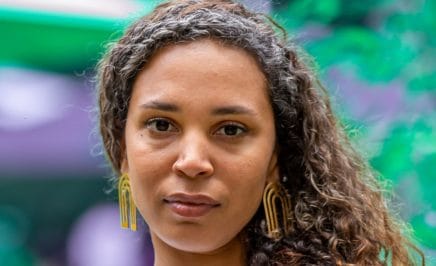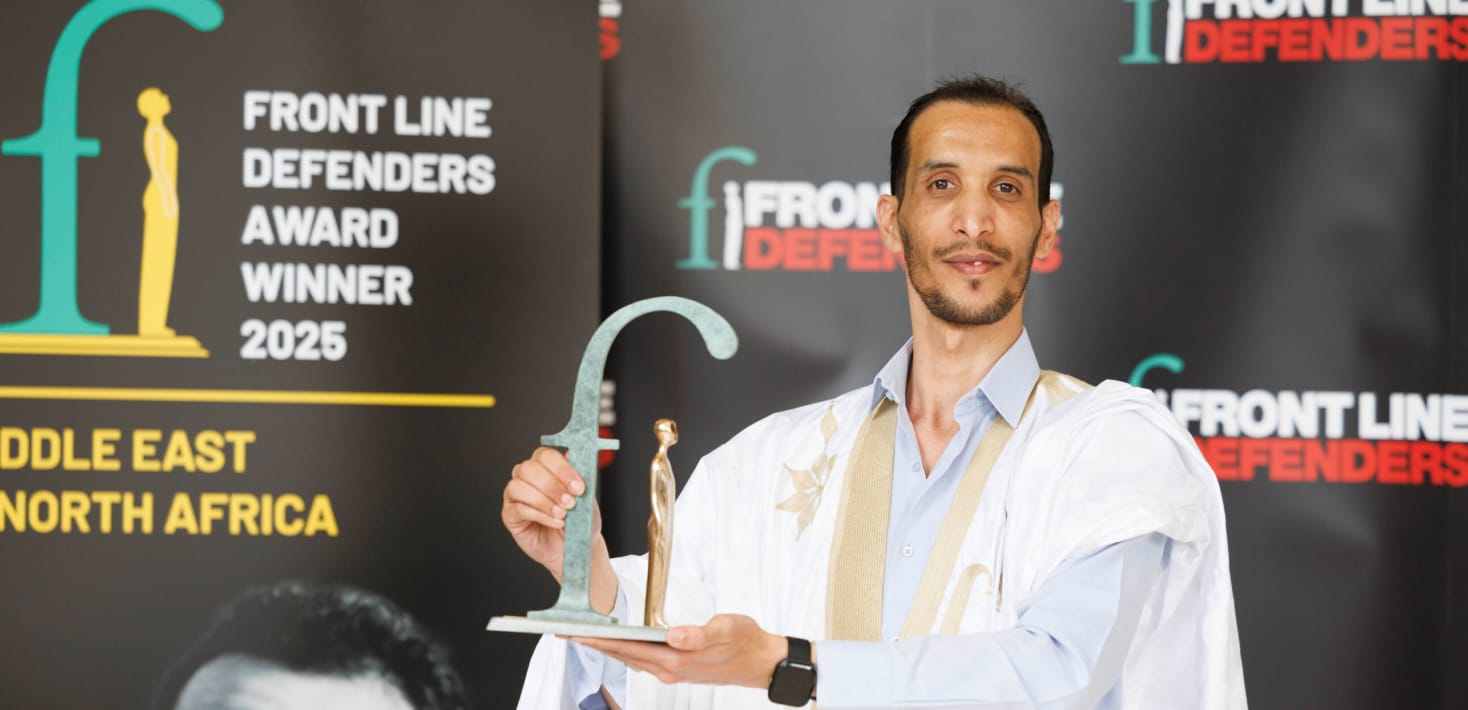
Mhamed Hali is a Sahrawi lawyer and human rights defender living and working in the occupied territories of Western Sahara. He is a Doctor of Law and International Humanitarian Law, and Secretary General of the Association for the Protection of Sahrawi Prisoners in Moroccan Jails. From a young age and despite the many challenges he continues to face, including being banned by the Moroccan state from practicing law as punishment for his human rights activism, he has never given up the fight for justice.
Mhamed shares his story, his hopes for the future, and some advice for those thinking about joining the fight for human rights.
I was born in Laayoune, the largest city in Western Sahara, in 1987. I spent my childhood hearing stories of the grave violations committed against the Sahrawi people, my people, after the Moroccan military invasion of the region in 1975.
Since then, we have been fighting for our right to self-determination, as backed up by international law in the ruling of the International Court of Justice. But the Moroccan authorities do not tolerate any activity or movement that seeks to empower us or defend our rights. Over the years, they have targeted many human rights defenders, journalists and students by harassing, attacking and arresting them as punishment for their work.
Solidarity, justice and community
The values of solidarity, justice and community that my family taught me had a profound impact on me from a young age. They inspired me to study law and become a human rights activist to help shine a light on the situation of the occupied territories of Western Sahara and act against injustice.
After university, together with a group of activists we formed the Association for the Protection of Sahrawi Prisoners in Moroccan Prisons. We worked to engage with international human rights mechanisms to advocate for the situation of the many victims of human rights abuses committed by the Moroccan authorities in Western Sahara.
The organization continues to work on cases of Sahrawi political prisoners who are still being arrested today. We help by accompanying them from the initial stages of their arrest until their release, following their trials, coordinating with lawyers and international observers, monitoring their conditions in prison and reporting on them.
Retaliation
What motivates me the most is seeing the real impact when efforts translate into tangible changes in the lives of individuals and victims, whether it is by enabling someone to obtain their rights, protecting a vulnerable group from abuse, or raising awareness of what is happening.
But things are very difficult.
As Sahrawi defenders we are often targets of repressive measures such as arrest, abduction, physical assault, illegal prosecution and defamation of us and our families.
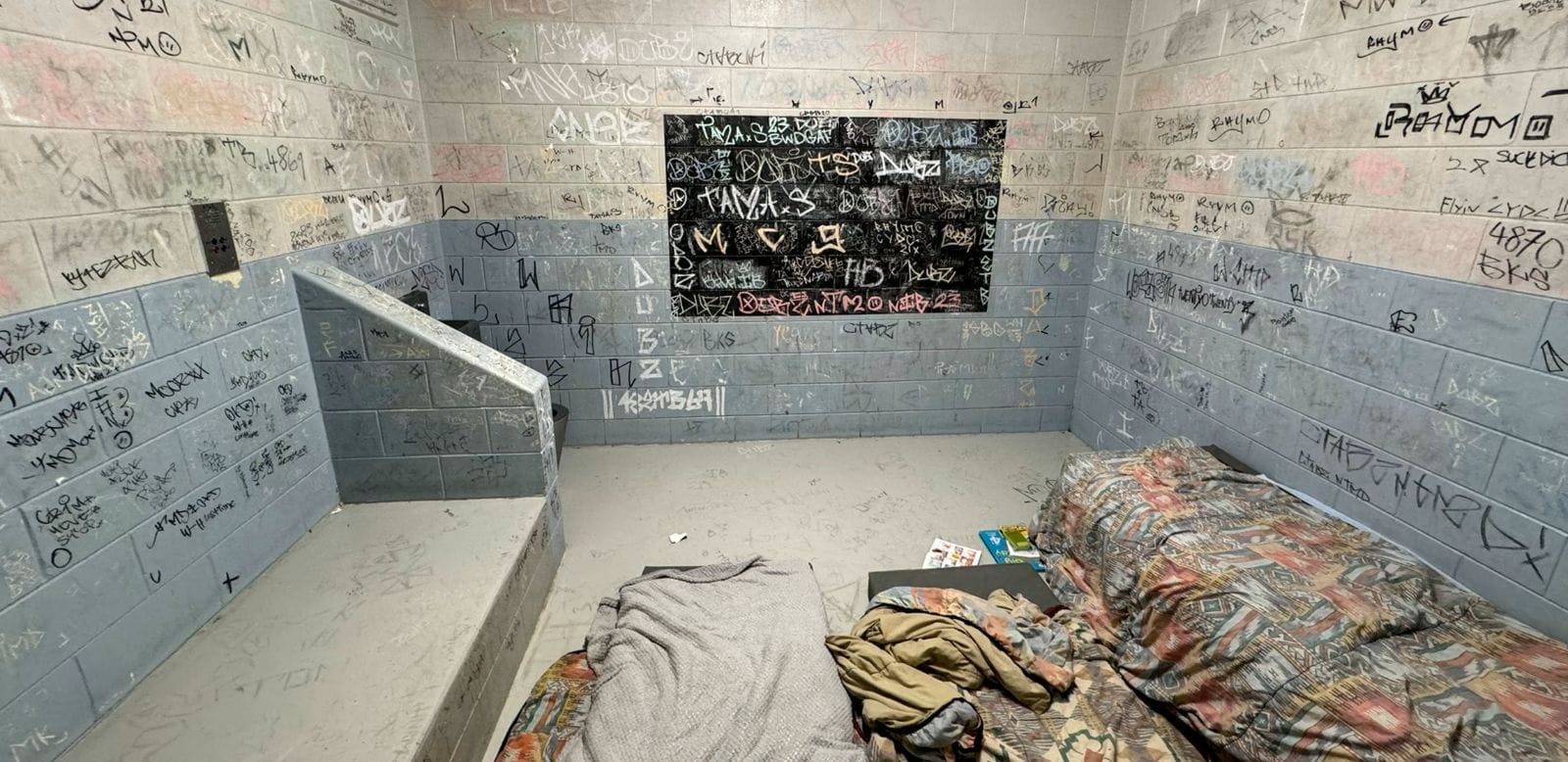
The authorities have targeted me on many occasions. In 2007, I was abducted by the Moroccan intelligence services at the entrance to the city of Laayoune, where I was detained for eight days without trial. They tortured me as punishment for my activism at university. A few years later, in 2009 and 2012, I was subjected to two vicious attacks in Marrakesh and Rabat. Both times, masked individuals threatened to kill me if I did not stop my student activism. I filed complaints with the Moroccan police after each incident, but they never investigated. I’ve also been harassed on social media.
But one of the most dangerous retaliatory tactics by the Moroccan authorities against activists and human rights defenders is to ban us from working – many are migrating for this reason.
I was one of the victims of this tactic. In 2019, the Agadir Bar Association rejected my application even though I had passed the exam, and all the forms were filled in correctly. They claimed they received a secret report from Moroccan security services alleging that I was known for my anti-Moroccan activities, referring to my political and human rights work. I appealed this decision in the Moroccan courts, but they upheld the rejection, citing my stance on the Western Sahara issue. I have also been barred from accessing a number of jobs, even in the private sector as the government has put pressure on employers to prevent them from hiring me.
Shining a light
Despite all the pain, difficulties, and risks, the humanitarian aspects of this voluntary work make us human rights defenders more resilient and able to face challenges. I take inspiration from the smiles on the faces of victims and their families; feeling the profound impact of my human rights and peace work on the perpetrator, even if he does not admit it; and feeling that I have done my part for my people, because they deserve to live with dignity.
One of our most important goals as human rights defenders is to shine a light on the situation here, despite the blockade on information imposed by the Moroccan authorities who prevent foreign missions from entering the territory.
For us, change begins when we are able to secure protection for human rights defenders and activists on the ground and generate visibility for their work, and fight in order to mobilize the international community to stop the violations and hold the perpetrators accountable.
A world of peace and humanity
International human rights organizations have done a great deal to highlight the human rights issues in Western Sahara and the dangerous reality in which we human rights defenders work. Amnesty International has helped strengthen and give visibility to our cause and securing the Front Line Defenders Award for Human Rights Defenders at Risk has been an honour.
When I went to Dublin to receive my award in May, I visited the memorial that Front Line Defenders and the Irish Department of Foreign Affairs built for human rights defenders that have been killed. This was a very emotional moment for me.
I felt pain as I remembered the sacrifices that human rights defenders have made and continue to make so that the world may live in peace and so that rights may prevail and the law may reign supreme.
This appreciation and recognition provide us human rights defenders with a dose of hope, a medicine for the wounds we suffer every day in extremely complex and dangerous environments.
My message to anyone who wants to defend human rights is that they have chosen the best path to create a world of peace and humanity. Although it is a path full of thorns and dangers, bringing smiles to the faces of forgotten victims makes it worth continuing. Every newcomer to the field of human rights advocacy adds to the light that illuminates the dark tunnel of reality.
Amnesty International is a global movement of more than 10 million people who take injustice personally. We are campaigning for a world where human rights are enjoyed by all – and we can only do it with your support.
Act now or learn more about our human rights work.