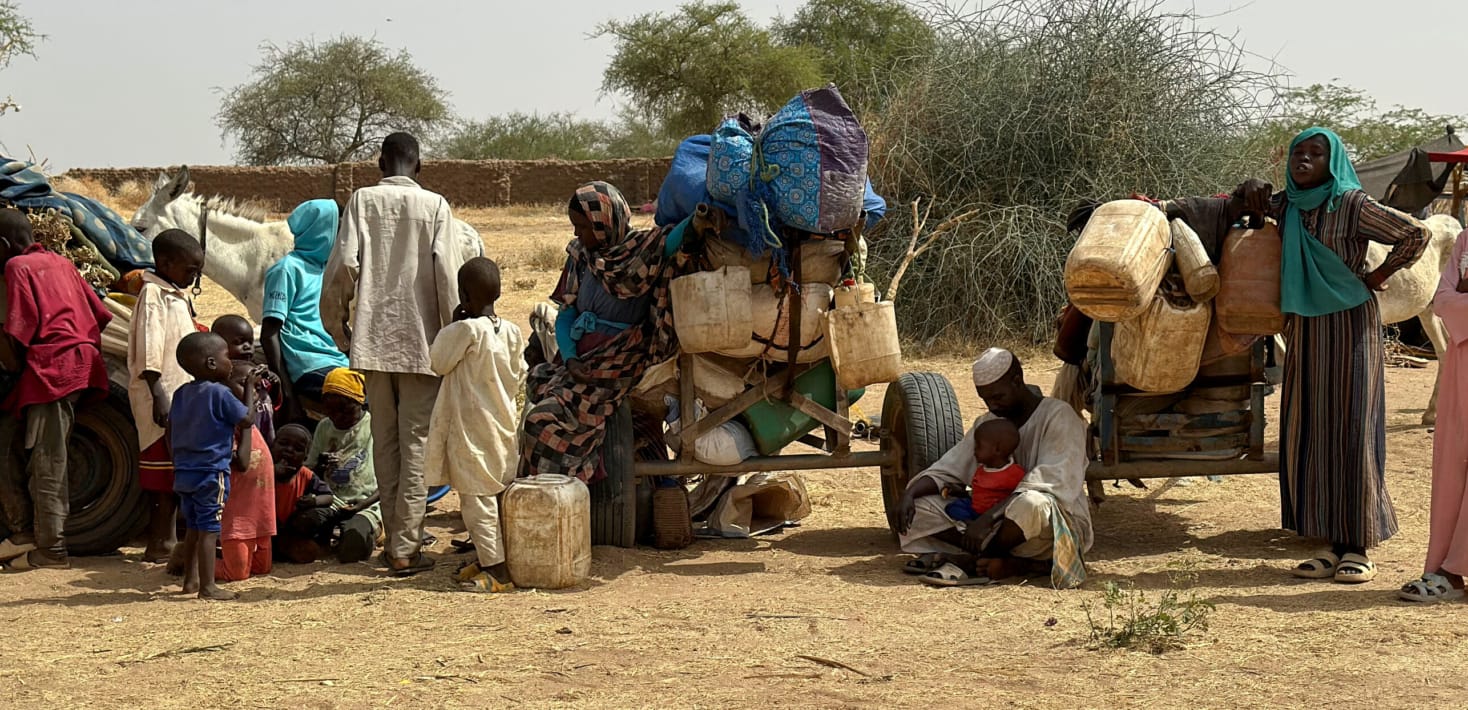
Sudan is facing the world’s largest displacement crisis and one of the most devastating humanitarian catastrophes of our time.
Since April 2023, fighting between the Sudanese Armed Forces (SAF) and the Rapid Support Forces (RSF) has escalated into a brutal nationwide conflict. Civilians are being deliberately targeted. Entire communities have been attacked. Women and girls have been subjected to widespread sexual violence. Cities have been besieged. Camps for displaced people have been assaulted.
More than 12 million people have been displaced. Tens of thousands of civilians have been killed.
Despite this, the crisis in Sudan remains dangerously underreported and under-addressed by the international community.
Amnesty International is calling for urgent action to protect civilians, end the flow of weapons fuelling atrocities, and ensure accountability.
At this moment, as Sudanese communities endure unimaginable violence and starvation, your voice matters.
What Amnesty is calling for to the Australian Government?
- Back an immediate, independently verified ceasefire
- Publicly call for a ceasefire that prioritises civilian protection.
- Push for meaningful diplomatic pressure on both the SAF and RSF to end attacks on civilians.
- Strengthen and enforce the UN arms embargo
- Champion stronger enforcement of the existing UN arms embargo on Darfur.
- Advocate for expanding the embargo to cover all of Sudan.
- Urgently review Australian defence exports
- Review Australian defence exports to the United Arab Emirates, which has been accused of supplying weapons to the RSF.
- Ensure Australia is not directly or indirectly contributing to violations.
- Impose targeted sanctions
- Support targeted sanctions against individuals and companies enabling atrocities in Sudan.
- Support accountability
- Back investigations and accountability mechanisms, including through the International Criminal Court.
- Demand transparency on weapons and resource-trade fuelling the war.
- Increase humanitarian support
- Increase funding for humanitarian aid with transparency and oversight.
- Fast-track visas for Sudanese survivors and families seeking safety.
What can you do?
1. UNDERSTAND THE CRISIS
Sudan remains is the world’s worst ongoing humanitarian crisis. The armed conflict that erupted in 2023 between the previously allied Sudanese Armed Forces (SAF) and the Rapid Support Forces (RSF) has spread to various parts of the country, including Gezira, Sennar and North Darfur states. Armed groups and actors joined the conflict, aligning themselves either with the SAF or RSF.
Despite multiple attempts to broker a peace agreement, the fighting has continued. The international community (including the UN and the African Union) has not taken adequate measures to protect civilians, end violations or disrupt the supply of weapons and other support to the warring sides.
All parties to the conflict continue to commit serious violations and abuses of international human rights law, and violations of international humanitarian law, resulting in mass casualties, numbering tens of thousands of civilians killed.
States continue to supply weapons to the warring parties, including in Darfur, in violation of a UN Security Council arms embargo. Women and girls were subjected to widespread conflict-related sexual violence. Looting and destruction of civilian property violated economic, social and cultural rights. A near-total telecommunications blackout restricted the right to freedom of expression and the ability of humanitarian organizations to deliver aid. Impunity persisted for conflict-related violations and abuses.
Since 2023 over 12 million people have been internally displaced or have sought refuge in neighbouring countries and live in dire conditions.
The RSF deliberately killed civilians, took hostages, pillaged and destroyed mosques, schools, and health clinics during a large-scale attack in April 2025 on Zamzam, the largest camp for internally displaced persons (IDPs) in North Darfur State.
The RSF’s 18 month long siege, and eventual takeover, of the city of El Fasher in late 2025 saw widespread summary killings and other serious human rights abuses. The RSF has also escalated attacks in the Kordofan region, with evidence of civilians suffering from similar serious human rights breaches.
All states fuelling the Sudan conflict must end support to the warring parties. The United Arab Emirates in particular must end its military assistance, including the supply of weapons, to the RSF.
The international community – including the UAE, the UN Security Council, EU member states, the United Kingdom, United States, Russia, and China – has failed the people of Sudan. They must put urgent pressure on the RSF leadership to end their brutal attacks on civilians.
This is not chaos. It is documented, systematic violence against civilians
2. STAY INFORMED
Follow Amnesty International Australia for updates and research findings.
You can also follow:
Sudanese journalists, influencers and Sudan-focused organisations
- Eyes on Sudan (diaspora campaign page)
- Sudan Solidarity Collective
- Sawt Al Sudan
- Sudan Updates
- Decolonize Sudan
- Darfur Women Action Group
- Sara (Instagram: @bsonblast)
- Nesrine Malik (Sudanese writer and commentator)
- Yassmin Abdel-Magied
- Yousra Elbagir (Sudanese journalist)
- HRRDs (Hope Relief and Rehabilitation for Disabilities Support)
Engage with Sudanese voices consistently, not just when violence spikes.
3. AMPLIFY VOICES
Amplifying lived experience is not symbolic. It shifts narratives.
Sudanese civilians, diaspora communities, and human rights defenders have been speaking out often at great personal risk.
Share:
- Testimonies from displaced families
- Reports from Sudanese doctors and aid workers
- First-hand accounts from Darfur
- Statements from Sudanese women documenting sexual violence
When sharing:
- Centre Sudanese voices
- Avoid graphic images without context
- Link to credible sources
- Continue engagement beyond a single post
Solidarity means sustained attention.
4. EDUCATING YOURSELF ON THE GENOCIDE
Being an effective advocate means understanding the historical and political context.
Sudan’s current crisis is rooted in:
- The legacy of the Darfur genocide
- Militarisation of politics
- The 2019 revolution and subsequent military takeover
- Regional interference and arms flows
- Competition over resources and power
Additional educational resources:
- UN reporting on Sudan
- African Union statements
- ICC investigations
- Sudanese civil society briefings
Amnesty may not endorse all external organisations, but diverse sources strengthen your understanding.
5. HAVE CONVERSATIONS WITH FRIENDS, FAMILY, COLLEAGUES AND FELLOW ACTIVISTS
As an ally, one of the most powerful things you can do is have conversations with friends, family and your neighbours. By speaking out, you can allow others to learn, reflect and act. You’re also standing up for what you believe in – empathy, compassion and fairness. It’s virtual that we build up mass support around our campaigns, and face-to-face conversations are still one of the most effective ways of doing this. Check out our resource on how to have structured conversations on campaigns.
Take Direct Action
The crisis in Sudan is not inevitable. It is the result of political choices including the choice by powerful states to continue supplying weapons and avoid decisive diplomatic pressure.
Governments respond to pressure. Sudanese civilians cannot afford global silence.
Your action adds weight. Your pressure builds momentum. Your solidarity shifts the narrative.
1. EMAIL YOUR MP
You can send a direct built email to your MP here. If you would like to email in your own words, call on your MP to:
- Back an immediate ceasefire
- Strengthen and enforce the UN arms embargo
- Review Australian defence exports to the UAE
- Impose targeted sanctions
- Support ICC accountability
- Increase humanitarian funding
- Fast-track visas for Sudanese families
A few hundred emails in an electorate can shift attention. A few thousand nationally can shift policy.
2. CALL YOUR MP
Another way you can engage with your MP is by phoning their office. MPs rely on this as one way of knowing the level of support an issue has in their electorate. It only takes a few phone calls for them to notice there is support for an issue. If you can coordinate with others to phone their office and call for a ceasefire they will take note. Keep in mind that through this method you most likely won’t get to speak with the MP. You will most likely speak with a staff member or leave a voicemail. It’s simple to do, only takes a few minutes, and makes a big difference.
Identify yourself as a constituent. Keep it concise. Ask what action they are taking.
Here are some key talking points to include:
- Immediate Ceasefire:
- I am calling because I strongly support Amnesty International’s call for an immediate and independently verified ceasefire in Sudan. Civilians are being deliberately targeted, and each passing day worsens the humanitarian catastrophe and displacement crisis.
- Documented War Crimes and Abuses
- I am deeply concerned about the serious violations of international human rights law and international humanitarian law committed by all parties to the conflict, including the Sudanese Armed Forces and the Rapid Support Forces.
- There is evidence of deliberate attacks on civilians, ethnically targeted violence in Darfur, widespread sexual violence, and summary killings. Urgent action is needed to prevent further loss of life.
- Protection of Civilians and Humanitarian Access
- I urge [MP’s Name] to advocate for immediate, safe and unimpeded delivery of humanitarian aid across Sudan.
- Civilians are facing starvation, siege conditions and displacement. Telecommunications blackouts and insecurity are preventing aid delivery and restricting access to independent investigators.
- Australia must push for humanitarian access to be protected and prioritised.
- Strengthen and Enforce the Arms Embargo
- Australia must push for stronger enforcement of the existing UN arms embargo on Darfur and advocate for it to be expanded to cover all of Sudan.
- Weapons continue to flow into the country in violation of international obligations. This is fuelling atrocities against civilians.
- Review Australian Defence Exports
- I am calling on [MP’s Name] to urgently review Australian defence exports to the United Arab Emirates, which has been accused of supplying weapons to the Rapid Support Forces.
- Australia must ensure it is not directly or indirectly contributing to serious human rights violations in Sudan.
- Targeted Sanctions
- Australia should impose targeted sanctions on individuals and companies enabling atrocities in Sudan.
- There must be consequences for those responsible for attacks on civilians.
- Support ICC and Accountability Mechanisms
- Amnesty International calls for full support for the International Criminal Court’s investigations into the situation in Darfur and other accountability mechanisms.
- [MP’s Name] has a role in ensuring Australia supports credible investigations and accountability efforts. Impunity only prolongs violence.
- Support Sudanese Families Seeking Safety
- Australia should increase humanitarian funding and fast-track visas for Sudanese survivors and families seeking safety.
- Sudanese communities in Australia are deeply affected, and protection pathways must reflect the scale of the crisis.
3. MEET YOUR MP
A face-to-face meeting with your MP is a powerful way to get your voice heard and represented. You can request a meeting with your MP on your own, with a small group of like-minded people in your local community, or as part of an Amnesty Action Group, if there is one in your area.
Ask directly:
- What diplomatic pressure is Australia applying?
- Is Australia reviewing defence exports to the UAE?
- Will Australia support expanding the arms embargo?
- How is Australia increasing humanitarian support?
There are 120 Amnesty action groups covering the majority of electorates around the country. For Amnesty action groups, having an ongoing relationship with your local MP is critical.
As an Amnesty action group, you have the power of representing all the Amnesty supporters in your community which may make your MP more willing to meet with you. If you would like to know how many Amnesty supporters are in your electorate please contact activism@amnesty.org.au.
Send a request to your MP by email first. You can follow up with a phone call if you don’t hear back within a week. Here is a guide on how to request a meeting and engage with the MP.
If you need support organising a meeting, contact activism@amnesty.org.au.
- Practice what you want to say before calling.
- Identify yourself as a local constituent (and a supporter of Amnesty International Australia if you wish).
- Ask to leave a message for your local MP if you reach a staff member.
- Explain why you are calling and outline your key concerns in a concise way.
- Calling works if you don’t do it too often. If you haven’t heard anything from them for a week or two, follow up with another call to ask for an update.
4. ENGAGE WITH YOUR MP ON THEIR SOCIAL MEDIA
Visit your MP’s Facebook, Instagram and Twitter accounts and engage with the MP by adding comments on their social posts. Staffers monitor these comments and report to the MPs. Avoid making angry posts and engage in a constructive manner.
STAND IN SOLIDARITY WITH COMMUNITIES AFFECTED BY THE CRISIS
Attend rallies, forums and events organised by Sudanese diaspora communities.
Sudanese Australians have been advocating tirelessly while their families are under siege.
Showing up builds power.
You can find all the upcoming events, rallies and solidarity vigils by typing your postcode in the map below. We try to update this weekly but if you have an event coming up or we are missing something email activism@amnesty.org.au to get it added to the map.
STAYING SAFE AT PROTEST
Some protests will be much safer than others, for example, those which are overtly family-friendly. If you’re not sure what to expect, contact the organisers to get more information.
If there is a possibility that the situation could become dangerous, there are ways you can be prepared to make sure you stay safe.
- Know your rights: You have a right to peacefully assemble, a right to privacy and a right to protest. If you get injured, you have the right to receive medical care. Police must avoid the use of force.
- Plan ahead: Find out where the protest is taking place and look for information about what to expect. Make a plan with your friends in case your group gets separated.
- Wear protective clothing: You may need clothing that covers all your skin to protect you from exposure to sun and pepper spray. Bring shatter-resistant eye protection like sunglasses or swim goggles and a bandana soaked in water, lemon juice or vinegar that you can wear over your nose and mouth.
- Pack emergency supplies: Bring a basic first-aid kit, water that you can use to clean your eyes and face, identification, enough cash for a pay-phone call and transport and a fresh set of clothes.