
By Cassie Ponton & Charlie Eggleton
A dazzling celebration of queer pride and glitter-fuelled resistance is upon us once again as we draw nearer to the 48th edition of the Sydney Gay and Lesbian Mardi Gras Parade.
Although now known for rainbows, sparkling brilliance, and unapologetic celebration of the all-consuming vibrance and diversity of our LGBTQIA+ community, this was not always the case.
The Mardi Gras Parade we know today is the result of some 40-plus years of history, with humble and brave beginnings as a grassroots protest in 1978. This was a protest for gay rights and an event that was to shine a light on the significant challenges and discrimination facing the LGBTQIA+ community, as well as encourage a celebration of being queer and the vitality that defines the community.
This protest ended with police violence and arrests, spurring on further demonstrations and conflict over the coming months – but this powerful movement would persevere.
Queer rights
Since then, we have witnessed some key moments in time that have seen a steady but mentionable shift toward a society where queer rights are more widely acknowledged and respected. Queer people are more visible in public life – in the media, sport, and politics. And this has felt promising as we followed our timeline along what seemed to be an upward albeit slow trajectory.
In 1994, homosexuality was effectively decriminalised nationwide under federal law.
In 2011, the Department of Foreign Affairs and Trade introduced new guidelines making it much easier for transgender and intersex Australians to hold correct passports.
In 2017, Australians voted in a voluntary postal survey to legalise same-sex marriage, with 61.6% (7.8 million) voting ‘Yes’ and 38.4% (4.9 million) voting ‘No’. Although this certainly was a win for the community, it was hardly a runaway vote. The government deciding to put Queer people rights up for an opinion poll rather than instigating the law change themselves, left the LGBTQIA+ community in a vulnerable position. This should never have been a popularity vote, but a law passed by the government to reflect a more inclusive society.
Fast forward to the end of 2024, where 1 in 20 Australians identify as LGBTQIA+.
But while we may rightly celebrate the strides that have been made, we must not shy away from the truth: this journey has been far from smooth, marked not only by progress but by profound challenges and formidable setbacks along the way. Take a moment to put this in perspective – it is 2026, and same-sex marriage was only legalised in the last decade.
“This journey has been far from smooth, marked not only by progress but by profound challenges and formidable setbacks along the way.”
Nationwide surveys, such as the Census, have only recently made the decision to include sexual orientation and gender identity questions, having previously deemed them complex and unnecessary despite the clear knock-on effects this lack of data had in marginalising the community – without Census data, the government has little understanding of the healthcare and social services needs of LGBTQIA+ people. The deliberate reduction of the significance of queerness through exclusion in this case has been a difficult thing to comprehend.
And with a rise in global Authoritarianism and subsequent legitimising of discriminatory practices, we are seeing a rollback in queer rights at home and across the globe.
In Queensland, Trans Healthcare has been restricted by the governments, as we see the Crisafulli Government will continue its pause on Stage 1 and Stage 2 hormone therapies for children and adolescents with gender dysphoria in Queensland’s public hospitals. Violent attacks on queer people in Australia are on the rise, with reports that gay and bisexual people are being targeted through dating apps and social media sites.
When the Australian Federal Government was creating legislation and considering an overhaul of hate speech laws in January 2026, LGBTQIA+ communities still were not even considered or mentioned, let alone adequately protected.
Globally, we are witnessing a troubling resurgence of policies that target transgender and gender diverse communities. In the United States, numerous states have introduced or passed laws restricting access to gender-affirming healthcare, limiting participation in sports, and curtailing the recognition of gender identity in public life.
At the same time, prominent political figures such as Donald Trump have publicly signalled support for rolling back protections for LGBTQIA+ people, including expressing intentions to reconsider the federal recognition of same-sex marriage despite its nationwide legalisation in 2015.
Now more than ever, we must protect LGBTQIA+ rights
As two Queer individuals, we have been deeply saddened by what we have seen transpire in the last year alone. Now more than ever, we need to protect and uphold LGBTQIA+ rights. These developments are not abstract political debates — they have tangible human consequences.
Laws and policies shape whether people can live safely, access healthcare, form families, and participate in society with dignity. History shows that rights protections, once won, are not immune to erosion. That is why vigilance, evidence-based policymaking, and an unwavering commitment to equality and justice remain not only necessary but urgent.
So as we — and you — revel in the brilliance of Mardi Gras this year, immersing ourselves in the radiant joy, defiant glamour, and dazzling spirit of the community, we must also hold space for a deeper truth. Beneath the sequins and celebration lies a community that is not invincible — one that remains vulnerable, hard-won in its progress, and still in need of steadfast solidarity, protection, and unwavering allyship as we fight to address the gaps and challenges that continue to face the community.
What you can do
We highly encourage allies to check out our Ally guide to learn more about ways to show up and support the LGTBQIA+ community.
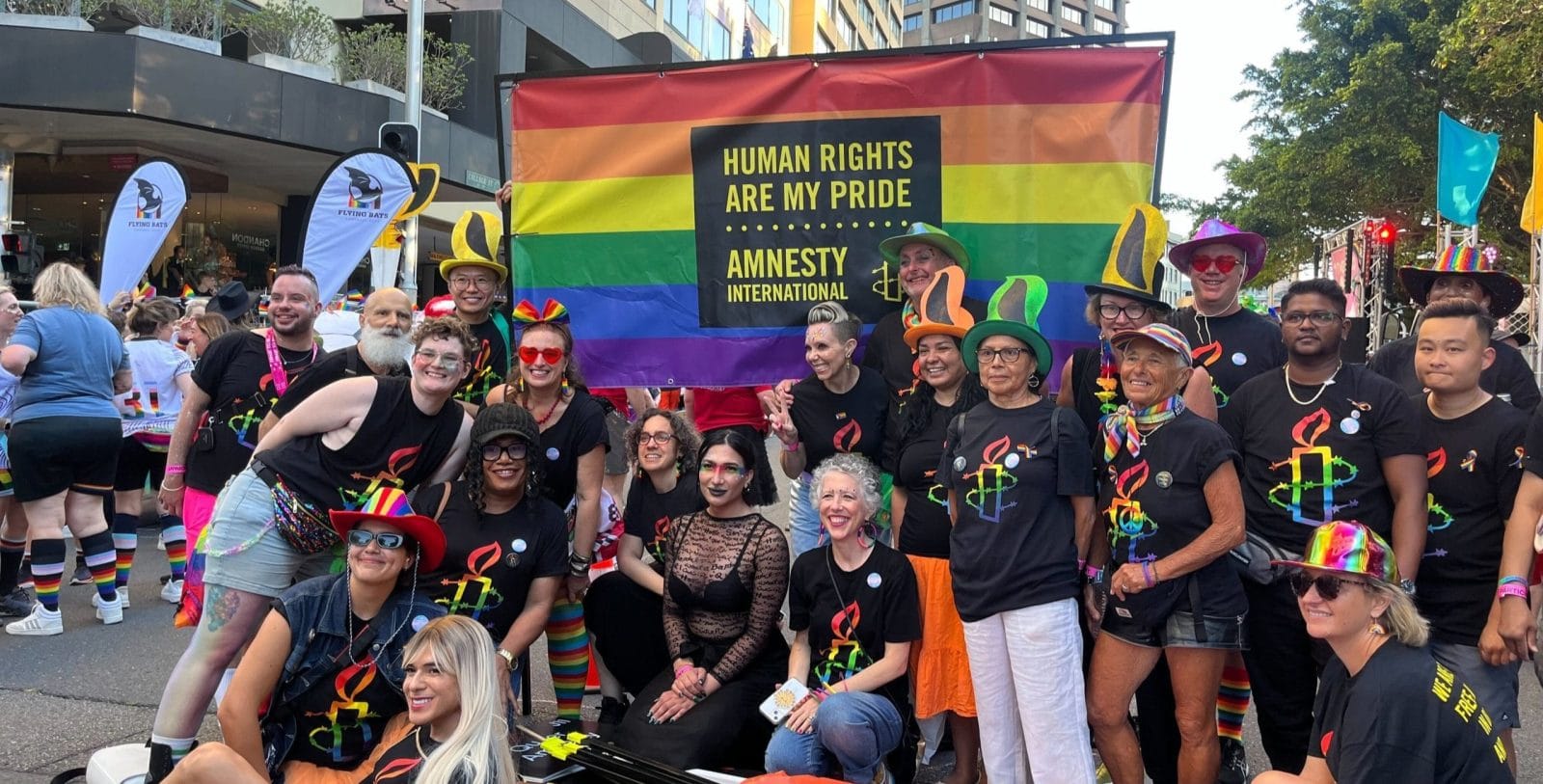
For those who are part of the LGBTQIA+ community and looking to be involved with Amnesty International Australia, we work with an incredible National Rainbow Network who have been a steadfast part of the Mardi Gras Parade for almost three decades and are always welcoming of new members – you can get in touch with them here.
More resources:
- The Power of Protest with Peter De Waal
- Your guide to understanding pronouns
- 4 ways to be an LGBTQIA+ ally this Mardi Gras
- 5 ways to take meaningful action for trans lives in Australia
Amnesty International is a global movement of more than 10 million people who take injustice personally. We are campaigning for a world where human rights are enjoyed by all – and we can only do it with your support.
Act now or learn more about our human rights work.