What happened at the 1965 Freedom Ride?
Over 15 days (13 February 13 – 26 February 26), a group of 30 University of Sydney student members of the Student Action for Aborigines (SAFA) group journeyed through western New South Wales, travelling through the towns of Walgett, Moree, Bowraville and Kempsey, to draw attention to the substandard living conditions for First Nations peoples and the widespread endemic racism in NSW country towns.
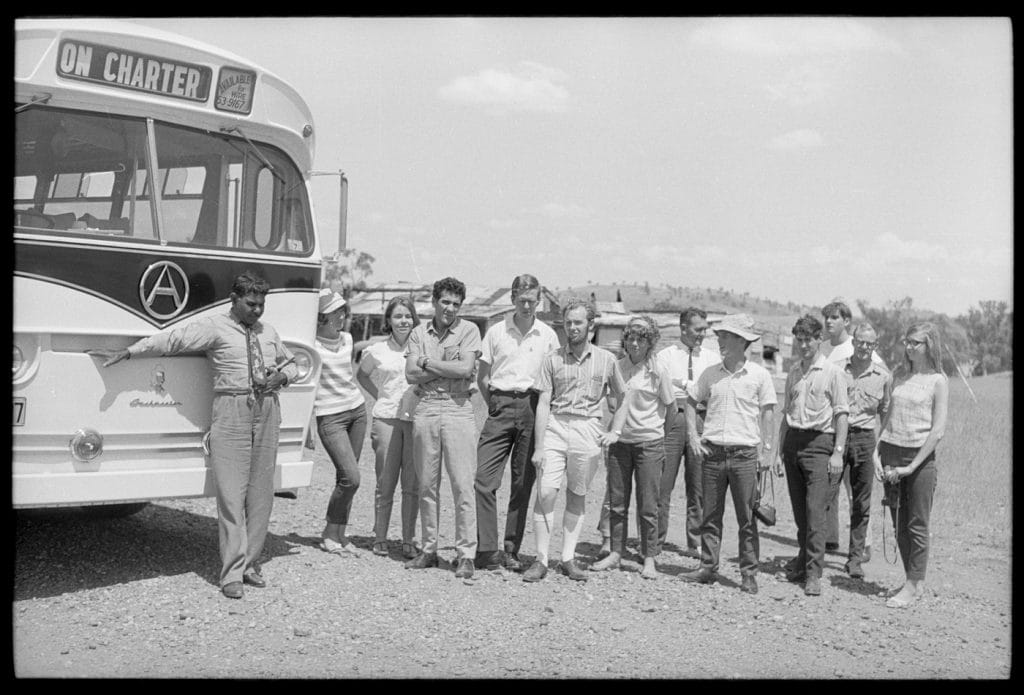
SAFA protesters standing alongside bus [Left to right:] Gerry Mason, Pat Healy, Sue Reeves, Charles Perkins, Ray Leppik, Bob Gallagher, Ann Curthoys, John Butterworth, Norm McKay, Alan Outhred, [unidentified], Colin Bradford, Louise Higham. Source: Negatives from the Tribune (Communist Party of Australia newspaper) featuring the Freedom Rides SAFA (Student Action For Aboriginals) Trip 17- 26 February, 1965. Mitchell Library, State Library of New South Wales and Courtesy SEARCH Foundation.
The group was led by Arrente and Kalkadoon man Charles Perkins, who, alongside Gary Williams of Gumbaynggirr and Bundjalung country, were the first Aboriginal University of Sydney students, after the National Union of Australian University Students (NUAUS) inaugurated its university scholarship scheme for Aboriginal students (Abschol) in 1957.¹
Following increasing student political interest in Aboriginal rights campaigns, the Student Action for Aborigines (SAFA) was formed in 1965, and Charles Perkins was elected president. Their mission was to spotlight the marginalisation of Aboriginal people in New South Wales towns.
Inspired by the Freedom Riders of the American Civil Rights Movement, SAFA students began their fifteen-day Freedom Ride through regional New South Wales in 1965, where they would go on to directly challenge a ban against Aboriginal ex-servicemen at the Walgett Returned Services League (RSL), and local laws barring Aboriginal children from the Moree and Kempsey swimming pools.
The group ensured that their protests were covered by the media, bringing the issue of racial discrimination to press attention and stirring public debate about the disadvantage and racism facing Aboriginal people across Australia at the time. ²
“The only thing we really shared was a concern for Indigenous rights, and a commitment to non-violent direct action.”
Freedom Rider, historian and Professor, Ann Curthoys (NMA Public Lecture, 2002)
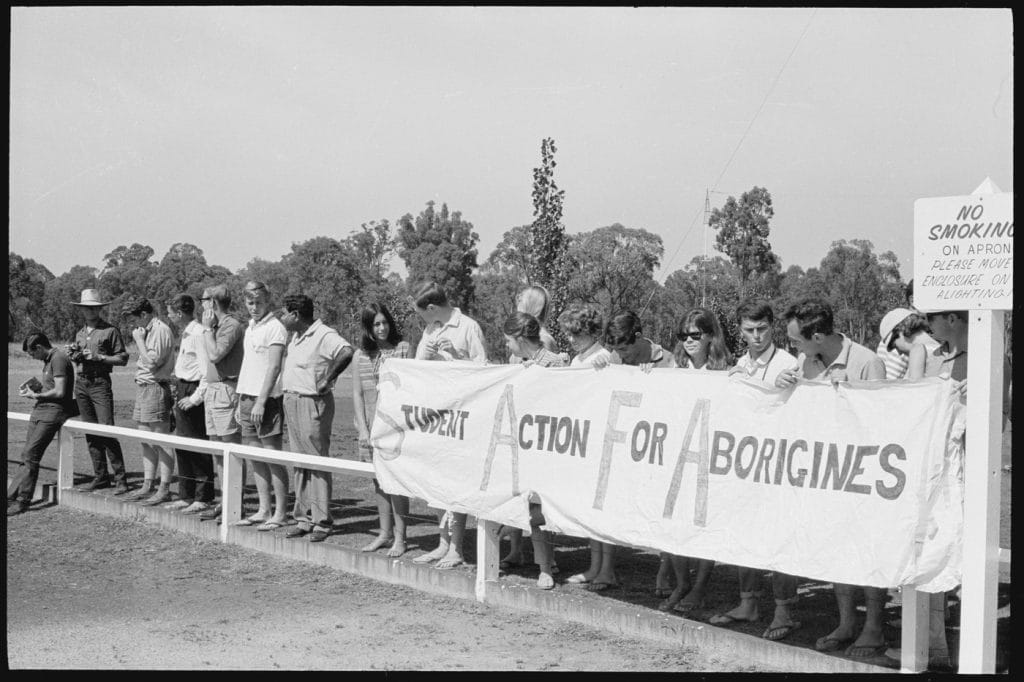
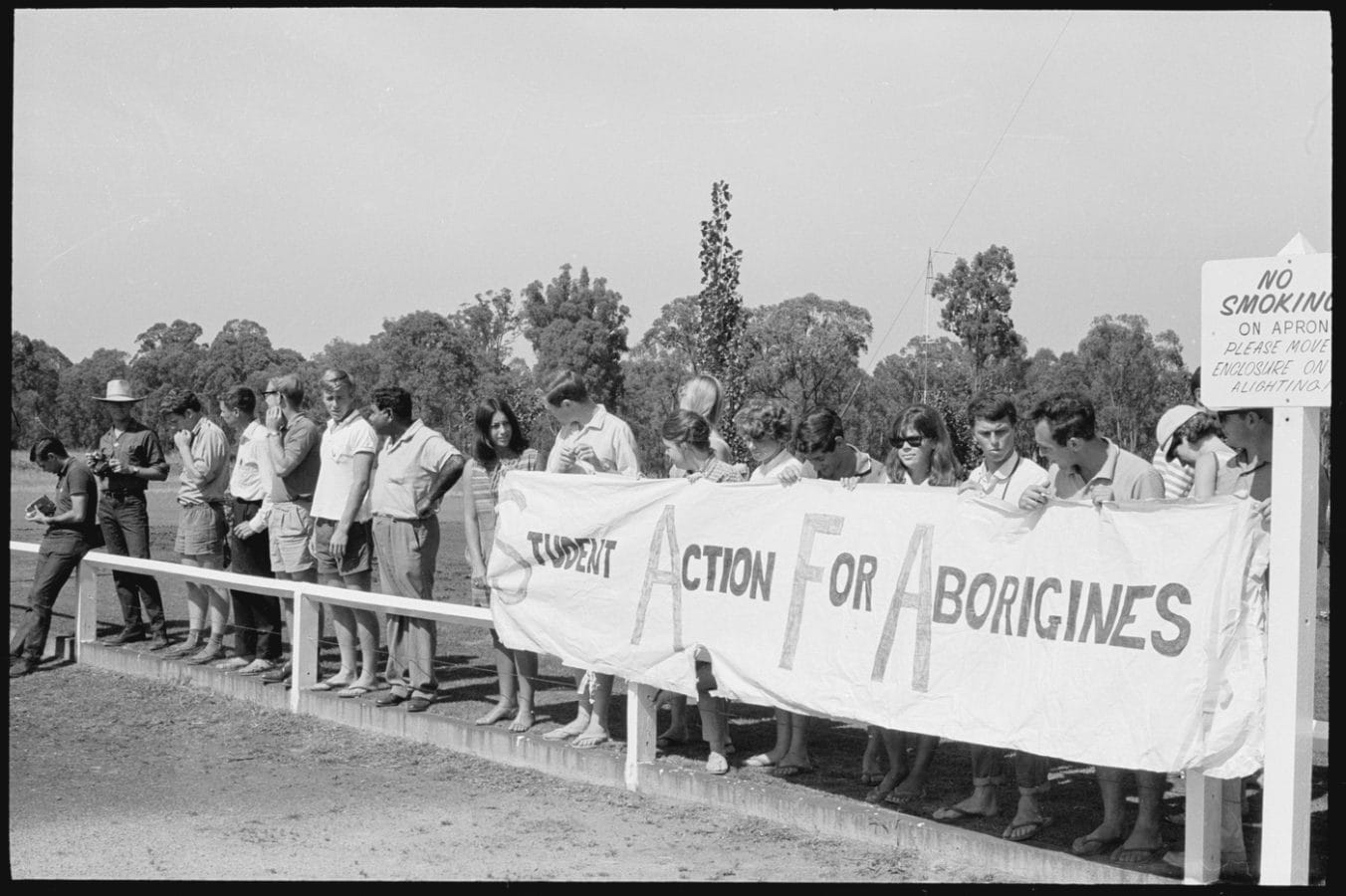
SAFA students with banner at Inverell Airport. Source: Negatives from the Tribune (Communist Party of Australia newspaper) featuring the Freedom Rides SAFA (Student Action For Aboriginals) Trip 17- 26 February, 1965. Mitchell Library, State Library of New South Wales and Courtesy SEARCH Foundation
Click here for a full account of the group’s 15-day journey.
Watch now
As featured in our Firestick Flicks film club last year, Living Black: Freedom Rides (season 22, episode 2) is available to stream for free on SBS on Demand.
This episode of the Living Black series, hosted by Karla Grant, revisits the monumental Freedom Ride journey. What they encountered along the way showed just how prevalent segregation and injustice were in Australia and their journey became a major milestone in the Australian civil rights movement.
Content warning: Aboriginal and Torres Strait Islander people should be aware that this film and discussion resource contains images, voices and names of deceased persons. The content discusses systemic and blatant racism and oppression of First Nations peoples.
The Freedom Ride of 1965 exposed endemic racism, empowering First Nations people to resist discrimination with renewed confidence and added mounting pressure on the Australian government for meaningful reform.
Two years after their Freedom Ride, over 90% of Australians voted overwhelmingly ‘Yes’ in the 1967 Referendum. The amendments enabled the Commonwealth Government to officially start counting Aboriginal and Torres Strait Islander people in the census and gave them the power to create specific laws for Aboriginal and Torres Strait Islander peoples by removing the words ‘other than the aboriginal people’ from the race power in section 51(xxvi) of the Constitution.
Despite the progress carried forward by the Freedom Riders and generations of Aboriginal leaders before and after them who have never stopped pushing for truth and justice, there is still a long way to go.
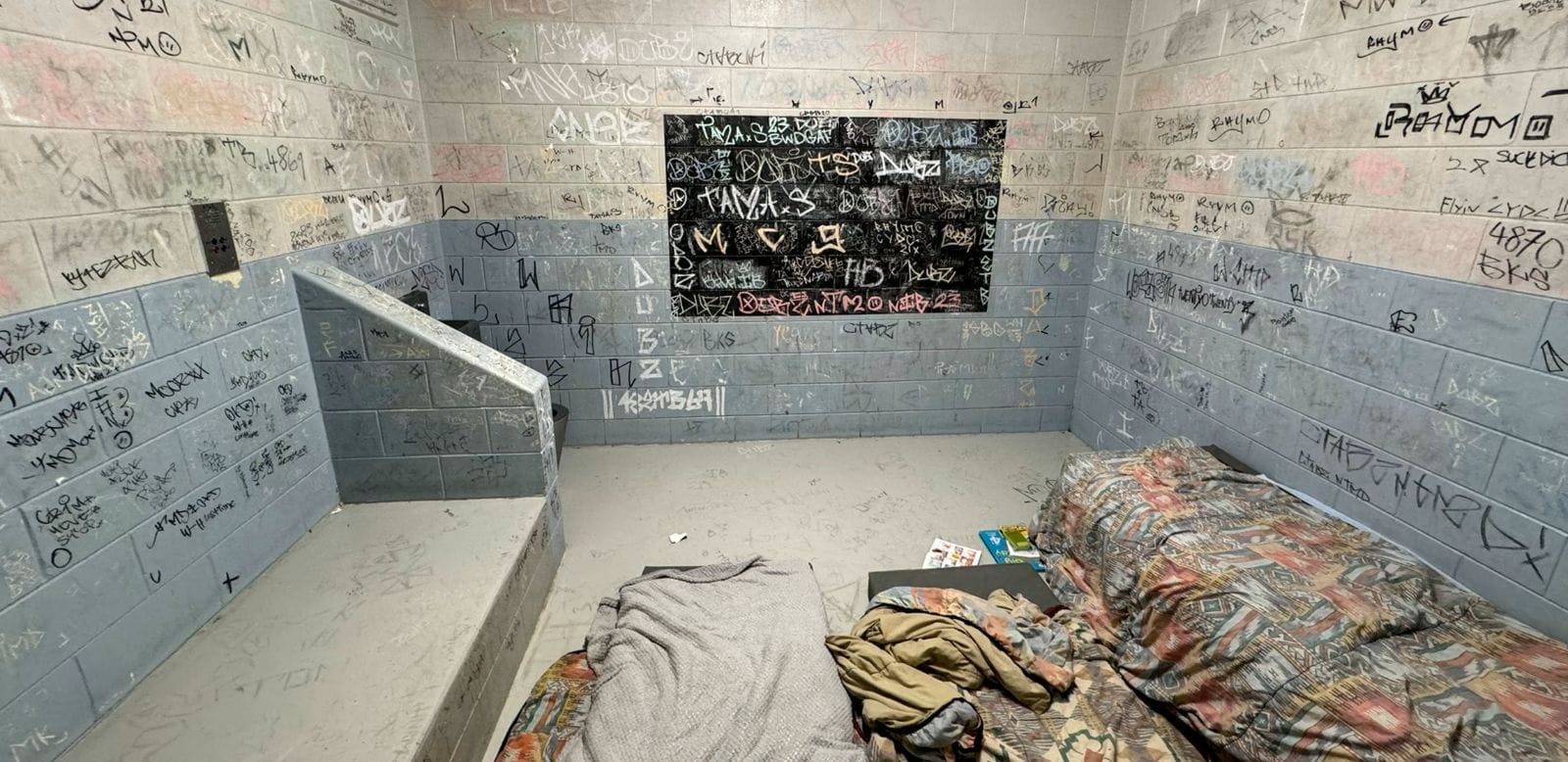
Right now in Australia, children as young as 10 are locked up in youth detention and subjected to practices that cause lasting harm and, in many instances, amount to torture: spit hoods, prolonged solitary confinement, and adult watchhouses and prisons.
First Nations children are disproportionately impacted, alongside many children with disabilities, neurodivergence, experience of out-of-home care, or who are victims of crime.
Decades of evidence show that locking up children and subjecting them to this treatment doesn’t reduce crime, costs around $1 million per year per child, and breaches international human rights standards. Children have died in custody – a national shame.
Sign our petition to end torturous practices in youth detention and help protect the most vulnerable children in our communities.
¹ Melbourne Law School | Student Freedom Riders
² AIATSIS | 1965 Freedom Ride
Amnesty International is a global movement of more than 10 million people who take injustice personally. We are campaigning for a world where human rights are enjoyed by all – and we can only do it with your support.
Act now or learn more about our human rights work.