LGBTI+ activists and trans women, Yren and Mariana share marching for LGBTI+ rights in Paraguay
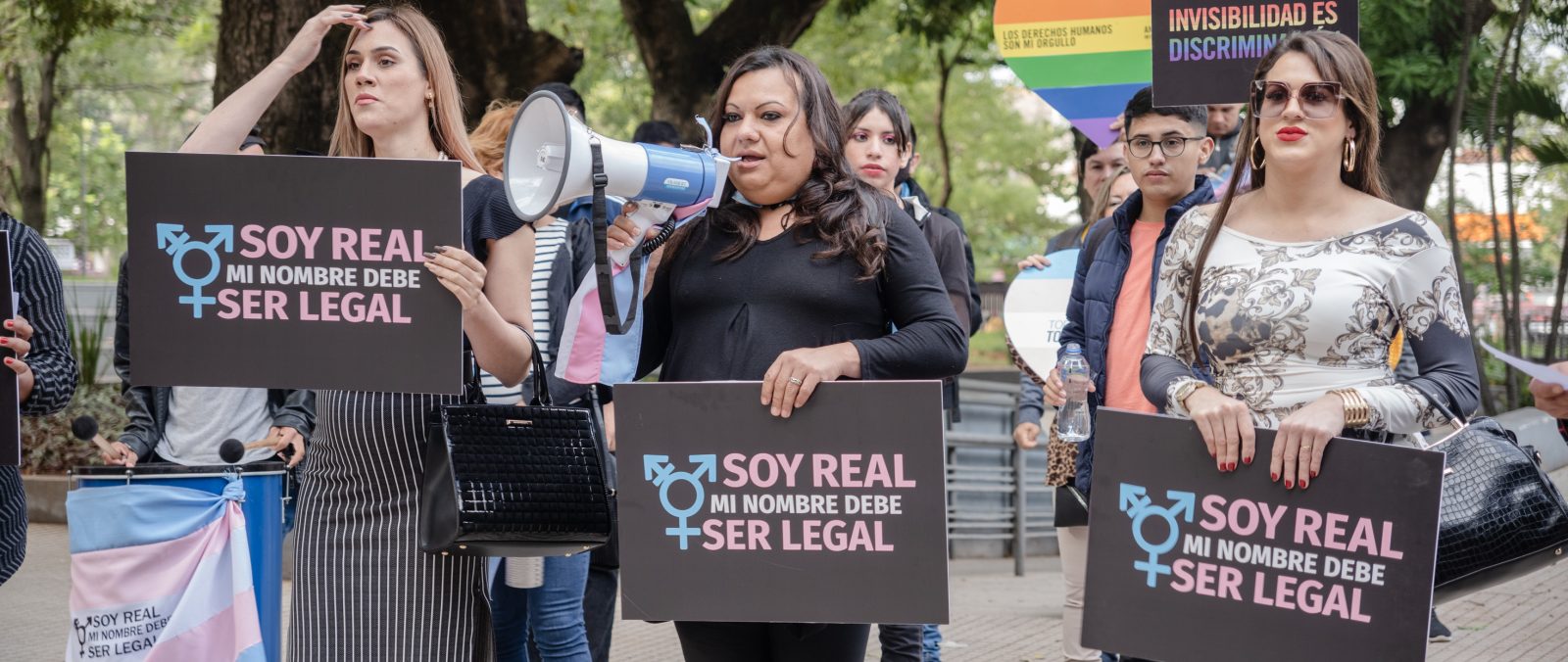
Yren and Mariana marching for LGBTI+ rights. © Amnesty International/P4ul3
Yren and Mariana marching for LGBTI+ rights. © Amnesty International/P4ul3. Yren Rotel takes part in a demonstration outside the Supreme Court of Justice, Asuncion, Paraguay, 28 June, 2022. Yren and Mariana Sepúlveda, both activists and human rights defenders of LGBTIQ+ people in Paraguay, began their processes of building their identity as transgender women in their childhood, a process that is not easy in a context as conservative as Paraguay's. Both suffered bullying and harassment at a very early age and were forced to drop out of school, in the case of Yren due to the violence she was subjected to by her classmates, and in the case of Mariana because the principals of the educational institution decided not to integrate a person with a non-normative gender identity with the rest of the students. However, their impetus and conviction to move forward, led them to get involved with civil society organizations and thus begin their activism and training as human rights defenders, to raise their voices and demand the Paraguayan government a platform of laws and policies that dignify the lives of trans women in the country. As part of their public campaign for gaining legal recognition, in 2016 they both initiated a judicial process to change their legal name and rectify their birth registration certificate. After four years of delay and stagnation in the process, the Civil and Commercial Court of Appeals referred the files of Yren and Mariana to the Constitutional Chamber of the Supreme Court of Justice Taking the principle of intersectionality of human rights, the lack of legal recognition of the identities of trans people in Paraguay leads to the violation of other fundamental rights that diminish their voice and participation in other areas of life. For example, there are groups and collectives of trans people who cannot register as organizations with a legal personality, since they need to present an identity document that does not correspond to their real gender identity, thus limiting their right to freedom of expression and peaceful protest. Furthermore, organizations of trans people usually face barriers to conduct their work of promotion and defense of human rights, because some authorities and conservative groups deny permits and block their right to use the public space to carry marches, demonstrations and public activities that promote information on LGBTIQ+ rights. These actions constitute a violation of the right to protest, as well as freedom of assembly and association.
Load more