Uyghur tech entrepreneur and philanthropist Ekpar Asat, who founded a media platform to help people in need, went missing in China’s Xinjiang region around 7 April 2016. He was reportedly convicted on charges of “inciting ethnic hatred and ethnic discrimination” and sentenced to 15 years in prison.
Here, his sister – human rights lawyer Rayhan Asat – shares her memories of the brother she last saw a decade ago.
This year marks 10 years since my brother, Ekpar Asat, was taken away by the Chinese authorities.
Ten years since he disappeared into a system that silences, punishes and separates families.
Ten years of pain, uncertainty and longing.
When I think about this anniversary, I feel both deep sorrow and stubborn hope. The pain of everything that has been taken from him, and from us. But also the belief that even after 10 years of injustice, this cannot go on forever.
He must be released.
The empty chair
When I think back to 2016, one image stays with me: the empty chair beside me at my graduation.
Ekpar was supposed to have been there with my parents. We were meant to celebrate together. Instead, I sat alone while everyone else was surrounded by their loved ones.
That empty chair has stayed with me ever since.
This is what repression does. It is not only prison walls or arbitrary decisions. It is stolen milestones, missed holidays, and all the ordinary moments that families should have shared.
My brother and I are very close friends. So when I think about these 10 years, I think not only about what was done to him, but everything that was taken from us.
Footballer, dancer, innovator
To the world, Ekpar is now known as someone who has been arbitrarily detained. But that is not who he is; he is so much more.
He is someone who genuinely loves helping people.
He was ahead of his time, as an entrepreneur who understood early on how technology could improve people’s lives. Through the platform he built, people in rural areas in Xinjiang could raise complaints, seek help, and recover what had been wrongly taken from them. He also supported children with disabilities to continue their education.
He believed in using innovation to do good.
He is thoughtful, humble and deeply kind. He treated everyone with the same respect, no matter who they were.
And he brought joy.
He was an excellent football player, so good that people nicknamed him after Roberto Baggio. He was also a great dancer. At weddings, when I came back from studying abroad and felt out of place, he was always the first to invite me to dance.
That was the kind of brother he was: someone who made sure I never felt alone.
I remember once getting into a taxi after returning home from studying abroad. When I mentioned my brother’s name, the driver immediately recognized it and refused to charge me. He said my brother had helped people, and he didn’t want to take my money.
That was the kind of impact he had.
A light, even in darkness
Even after everything, my brother continues to inspire me.
Whenever I struggle, I think of him. If he can endure what he has endured and still remain who he is, then I cannot give up.
What stays with me most is that even in detention, he continued to help others. I learned that at one point he was helping elderly detainees cut their nails because they were too weak to do it themselves.
Even in a place designed to strip people of dignity, he was trying to restore it.
That is who he is.
The cost of speaking out
People sometimes see me as an advocate, a lawyer, someone who has found purpose through this struggle.
But I do not want to romanticize that limited understanding of me and other advocates.
I have always had a purpose in life. Before the Uyghur atrocities began, I was working on helping Syrians displaced by war. When I worked at a law firm, I always took up pro-bono cases to help people facing persecution elsewhere. But I was many steps removed from the effect of such human rights violations. It was my own consciousness that motivated me.
So I did not choose this path only because of what happened to my brother; I chose it because it is meaningful work.
But it comes at a cost.
Too often, human rights work is made to look inspiring. But when it is your own family, your own community, it is profoundly painful.
It changes every calculation. Your emotions and fear for your loved ones can also affect your judgment, your day-to-day life, and dictate your advocacy. And your own safety is at risk. It changes everything.
One of the hardest parts of the past 10 years has been the uncertainty. We have very little information about my brother’s condition. That kind of not knowing is its own form of suffering.
You find yourself thinking about small things, what he eats, whether he is warm, whether he is safe.
And there are no answers.
Why every action matters
And yet, there have been moments that remind me why solidarity matters.
My brother once received a postcard with a simple message: “Good things happen to good people.”
It was just one postcard. But it reached him. And it gave him strength.
I think about that often.
People sometimes wonder whether letters, petitions or campaigns – such as those organized by Amnesty International – really make a difference. I believe they do.
They show that this person is not forgotten. They make it harder to hide abuses. They can improve conditions. They keep hope alive.
And they matter to families too.
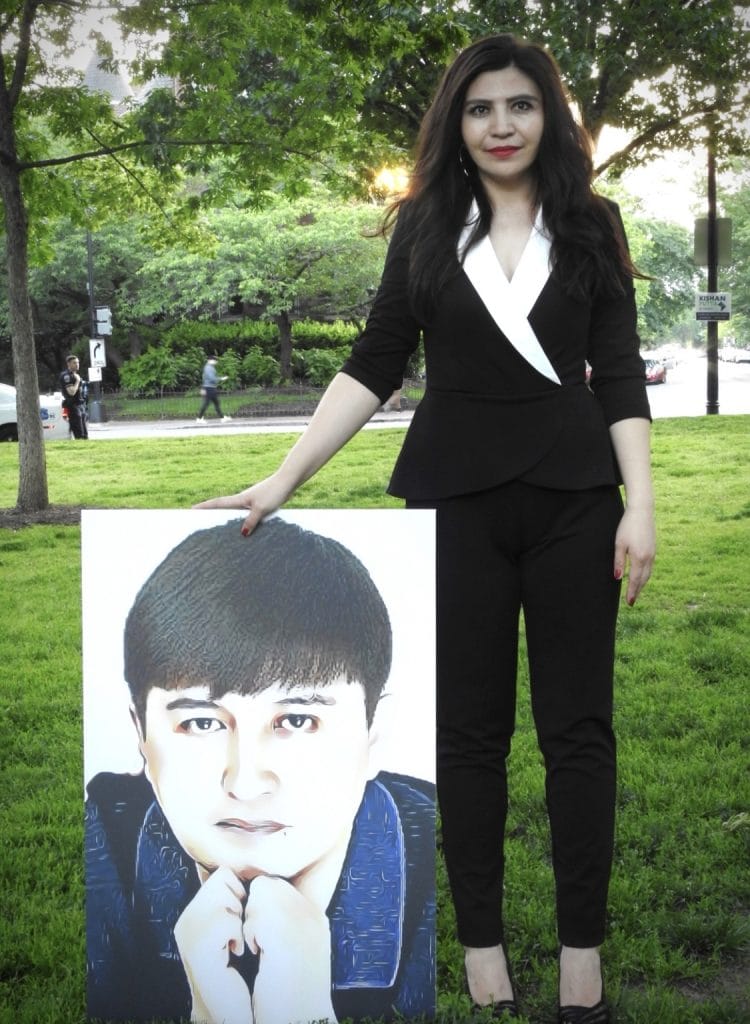
Every person who has spoken my brother’s name, held up his photo, or stood with us has made a difference in my life as well.
After 10 years, I know there are things that can never be restored.
I cannot give my brother back the years that were taken from him.
But I still believe in justice.
Justice means my brother being free.
It means Uyghurs being able to live with dignity, safety and without fear. It means acknowledging what has happened and ensuring it is never repeated.
My hope is simple: I want to be reunited with my brother in freedom.
Ten years have been stolen. He should not lose another day.
Head to Amnesty Australia’s Instagram to learn more.
Amnesty International is a global movement of more than 10 million people who take injustice personally. We are campaigning for a world where human rights are enjoyed by all – and we can only do it with your support.
Act now or learn more about our human rights work.