Reflections on the 2026 Invasion Day rally with Celeste Liddle – The Amnesty Review
Written by Yasmin Saab
Edited by Beth Mandle and Hannah Vanderzee
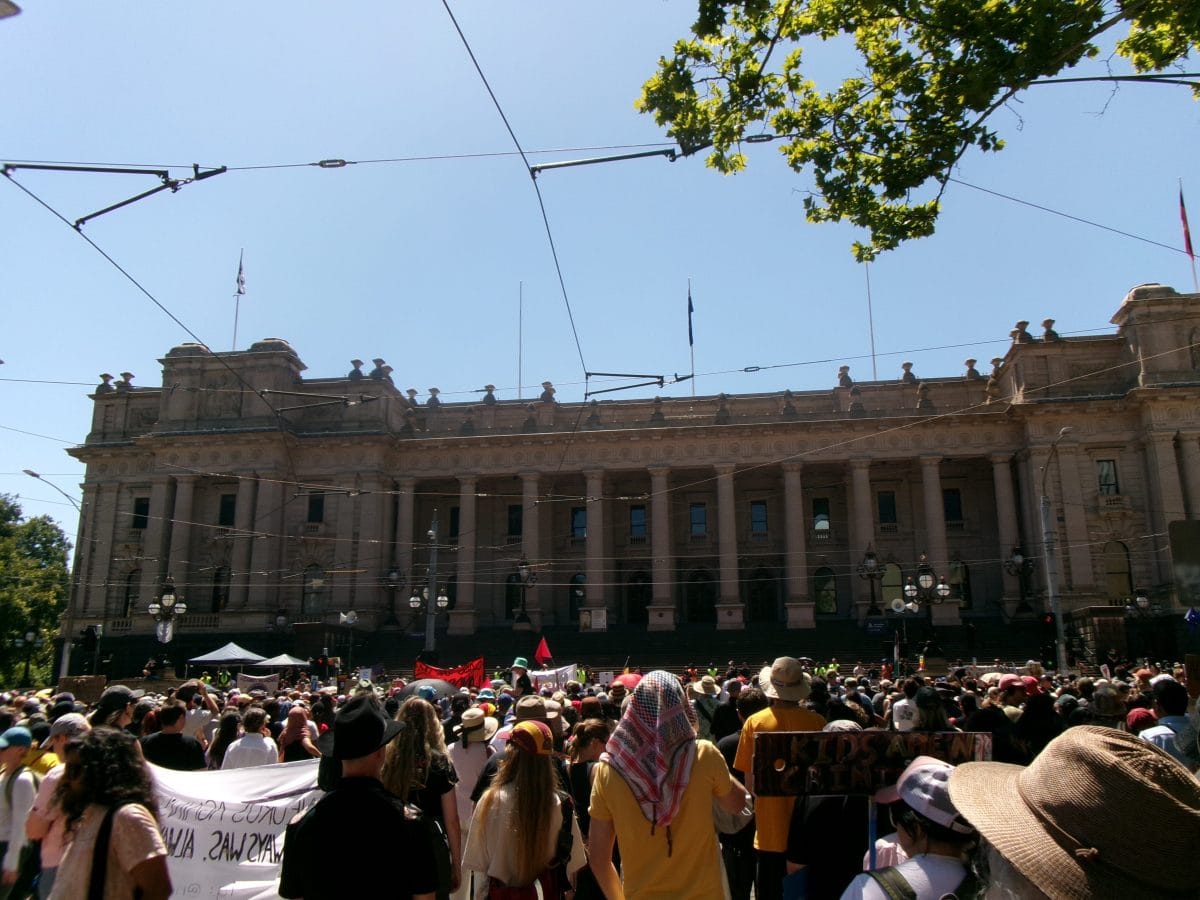
The Invasion Day rally this year brought together tens of thousands of people from across the country, united in the belief that so-called ‘Australia Day’ is a wound that needs healing.
The Invasion Day rallies, organised by the Warriors of Aboriginal Resistance (WAR), take place annually across the country on the 26th of January as a protest against Australia Day. Celeste Liddle, a leading member of WAR and proud Arrernte woman, describes the group as a “collective of [Indigenous] activists” advocating for Indigenous justice, having cut their teeth with early major protest campaigns, such as the protest against forced closures of Aboriginal Communities in 2015.
For the Warriors of Aboriginal Resistance, changing the date is not the point.
“When it comes to the idea of changing the date of Australia Day, we do think that that kind of misses the point, because what we’re essentially being asked is,
‘what day is a good day to celebrate the establishment of a colony and the erasure of tens of thousands of years worth of history and knowledge and peoples and lineages?’” – Celeste Liddle, Invasion Day rally organiser
Rather, the collective aligns more so with the Aboriginal Progressive Association, who held the first Australia Day counter-protest in 1938, a Day of Mourning and Protest, aimed at recognising the true and bloody history of Australia’s formation, the intergenerational trauma imparted onto Indigenous communities and advocating for Indigenous justice and sovereignty.
Protesters expressed optimism for Victoria’s First Nations Treaty but recognised that the fight for Indigenous justice is far from over.
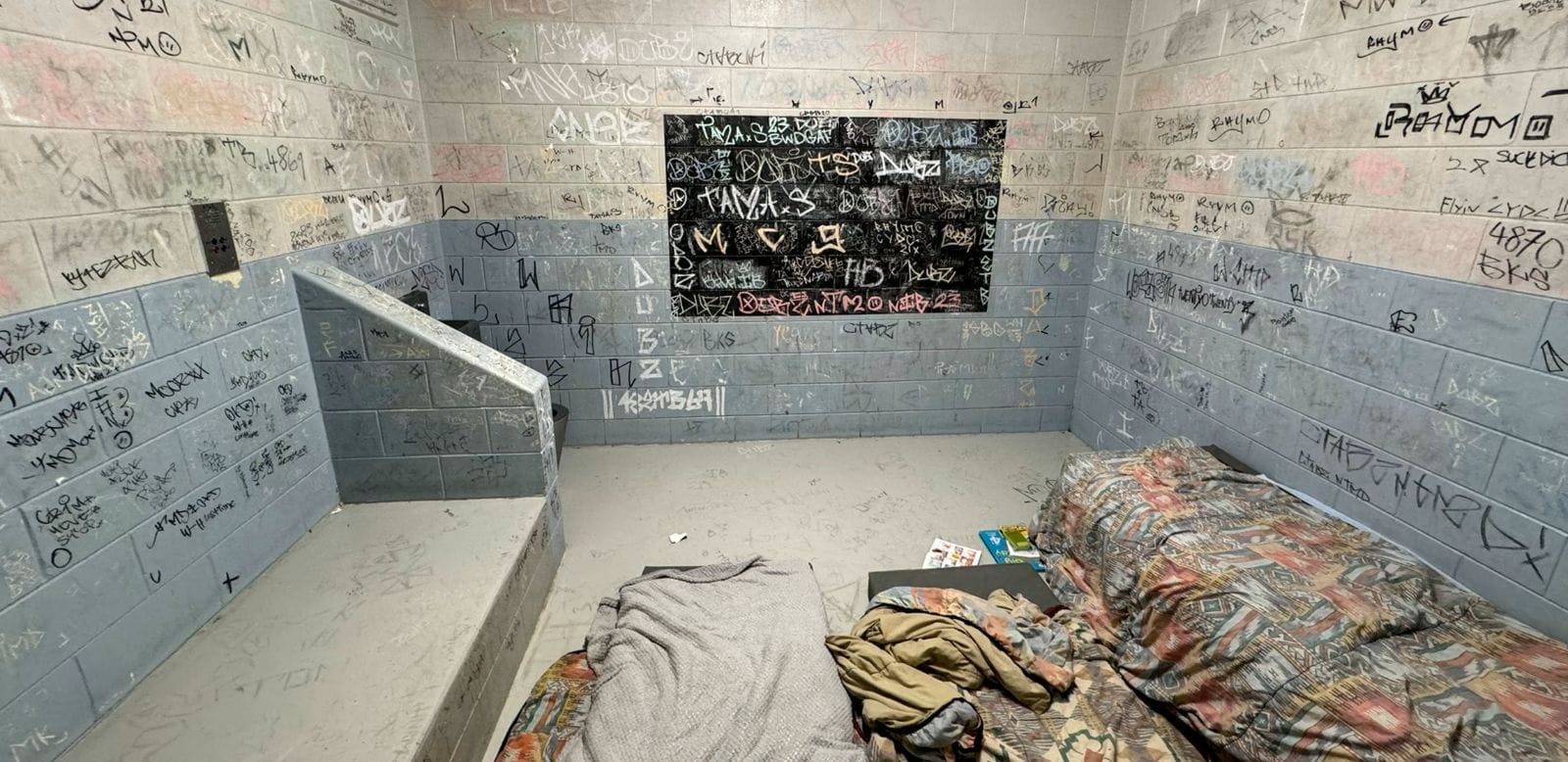
“While the Treaty has been a great victory in Victoria, there are still so many issues on the table, particularly [Black] deaths in custody, juvenile criminal justice, and so on” – Wayne Atkinson, Senior Yorta Yorta Elder
”We have a Treaty in Victoria – it should be nation-wide. The Opposition has threatened to take the Treaty off us. We’ve fought so long for a Treaty, which is only just and fair.” – Russel Morrison, Gundijtmara man
While progress has been made in reducing discriminatory police practices since the mid-1900s, First Nations children are still 26 times more likely to be incarcerated than their classmates. This is a larger, structural issue that can be traced back to racialised historical disadvantages and lazy “tough on crime” approaches, rather than more compassionate and effective diversion programs.
Furthermore, Victoria’s First Nations Treaty is still in a precarious position, with the Liberal opposition threatening to dissolve the Treaty if elected in Victoria.
The Invasion Day rallies aim to bring attention to such contemporary Indigenous justice issues, but even further than this, they encourage reflection on our shared moral consciousness as Australians. If we know the bloody history of Australia Day, how much apathy must be coerced into each and every Australian in order to celebrate it? How much acceptance of a racist, zero-sum, dog-eat-dog worldview does it take to feel pride as an Australian, when our national day of celebration commemorates genocide and violent colonisation?
“I very strongly believe that if we deal with the very racist foundations that this country was founded on… if we deal with those legacies and start being honest with them, we can actually really start to grow as a place… [We] would like to see a society that doesn’t promote ignorance, that doesn’t turn a blind eye to the injustices suffered by Aboriginal and Torres Strait Islander people [and] by extension, a lot of other groups of color that… have been victims of this very deeply embedded racist structure within Australia.”
– Celeste Liddle, Invasion Day rally organiser
We cannot take pride in our racist legacy, lest we want a racist Australia. Indeed, it is telling when the Invasion Day rally counter-protests are dominated by the fast-growing Nationalist Socialist Network – a genuine and self-proclaimed white supremacist group. It is telling when over 50 anti-immigration protesters violently attacked Camp Sovereignty unprovoked in late August last year.
Many protesters share the sentiment that Australia is regressing into an unsafe place for Indigenous people and other minorities.
“Australia is becoming an unsafe place for a person like me.” – Russel Morrison, Gundijtmara man
“Off the back of the Referendum failing, we’ve seen an uprising of really racist rhetoric in society but also in the media and in politics… Indigenous rights as a whole ha[ve] taken a few steps back in the last few years.” – Rachael, Gomeroi woman
While the new hate speech laws rushed through parliament this year have forced the Nationalist Socialist Network to officially disband, they fail to address the root cause of the growing white supremacist crowd in Australia. In fact, Liddle worries that the new hate speech laws will only “drive this hatred underground… [and] make it more insidious and embedded in [Australian] society”. A more cohesive Australia does not need more policing, it needs a cultural shift away from apathy and toward a more knowledgeable, optimistic and compassionate society. This is the spirit of the Invasion Day rallies.
The Invasion Day rallies aim to recognise and heal both the wound in First Nations communities and perhaps, the larger wound in Australia’s social and moral fabric.
“I’m a reasonably thoughtful person who’s living on stolen land, and if we’re going to have harmony and a country that we can justifiably be proud of and love – because we should love the country, it’s magnificent – we need to stop the fiction that it’s all okay. It’s not, it wasn’t and it isn’t. And we need to address it.” – Dave, protestor
This article was written by an activist contributor and originally published on ‘The Amnesty Review’: the Substack publication of the University of Melbourne chapter of Amnesty International, where students come to share stories and perspectives on human rights issues. The views expressed are those of the author and do not necessarily reflect the views of Amnesty International Australia or its staff.
The publishers would like to acknowledge that this article was produced on the stolen lands of Woiworung and Boonwurrung peoples of the Kulin nation and pay our respects to their Elders and past, present, and emerging. We honour their communities’ connection to unceded lands, seas and skies and continued fight for justice.
References
- Australia Day, Invasion Day, Survival Day: What’s in a name? – SBS NITV
- Calls for inquiry into Camp Sovereignty attack after Melbourne March for Australia rally – ABC
- Leaked records trace path from overseas Neo-Nazi groups to Australia’s emboldened far-right – ABC
- Neo-Nazis attack Indigenous protest site after anti-immigration rally in Melbourne as officer allegedly assaulted in Sydney – The Guardian
- Neo-Nazi group Nationalist Socialist Network says it will disband due to proposed hate speech laws – ABC
- The overrepresentation problem: First Nations kids are 26 times more likely to be incarcerated than their classmates – Amnesty International Australia
- Victorian Coalition vows to scrap Australia’s first statewide treaty with First Peoples if it wins government – The Guardian
Amnesty International is a global movement of more than 10 million people who take injustice personally. We are campaigning for a world where human rights are enjoyed by all – and we can only do it with your support.
Act now or learn more about our human rights campaigns.