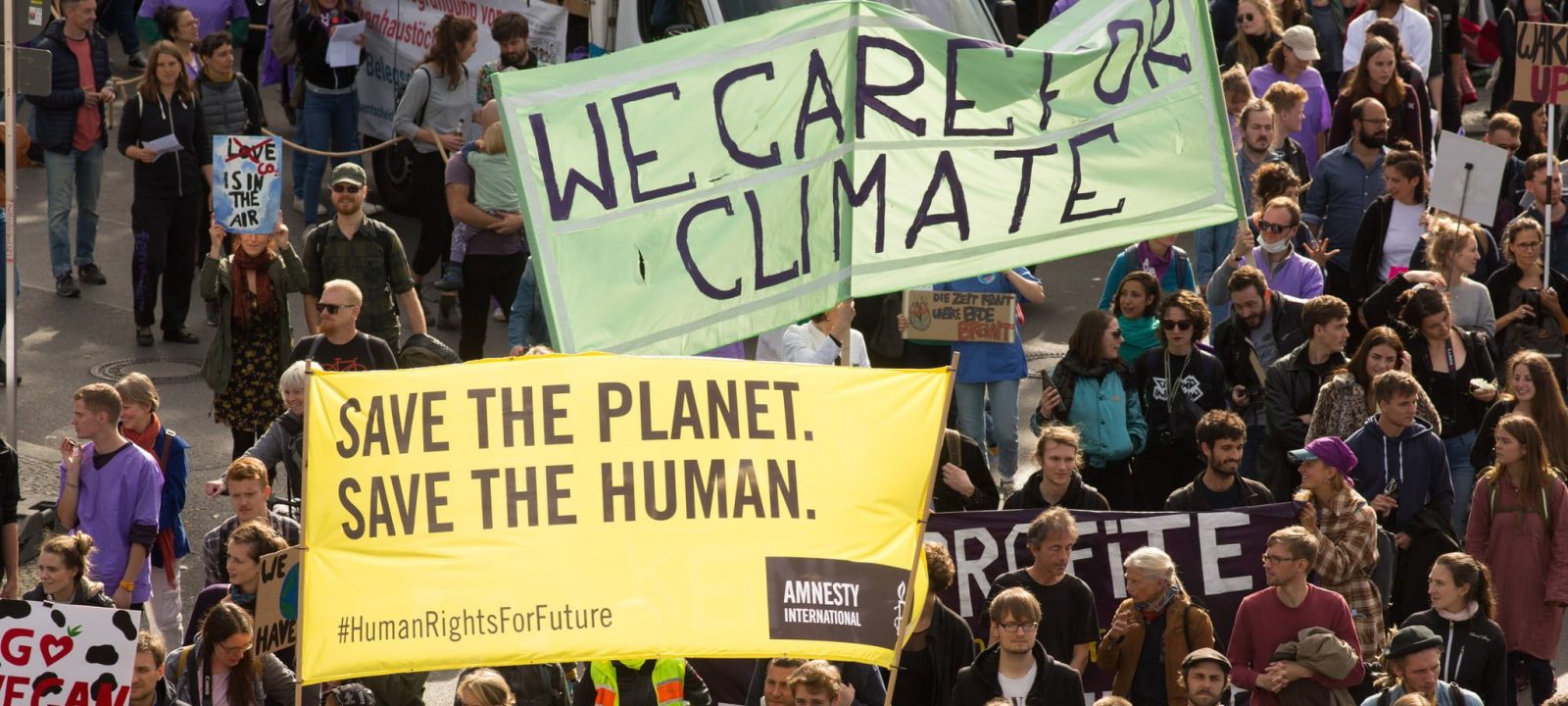
Climate change is one of the greatest human rights challenges of our time.
Every day that governments fail to act means more people and communities will suffer, many of whom have contributed the least to the climate crisis.
Around the world, people are fighting for climate justice and for a future where all human rights are protected.
The Australian Climate Case
Uncle Pabai and Uncle Paul are community leaders from the Guda Maluyligal Nation who are fighting for climate justice on Boigu and Saibai, outer islands of the Torres Strait.
Each year, rising sea levels are causing more destruction to the islands by eroding beaches, destroying sacred cultural sites and cemeteries where ancestors are buried, wrecking food gardens, and putting the islands’ infrastructure at risk.
In 2021, Uncle Pabai and Uncle Paul filed a case arguing that the Australian government had breached a duty of care to protect the Torres Strait Islands from harm caused by climate change.
In July 2025, the judgement in their landmark case was delivered.
Although the Justice found that the government does not currently owe a duty of care to protect Torres Strait people from climate harm, it did find that the “Torres Strait Islands and their inhabitants face a bleak future if urgent action is not taken to address climate change.”
The court heard evidence that communities on Boigu and Saibai could have less than 30 years left before their islands become inundated.
The Justice found that the Torres Strait Islands, their people, and culture, have been “ravaged by the impacts of human-induced climate change … rising sea levels, storm surges and other extreme water level events”.
People on Boigu and Saibai can no longer grow their vegetables because the soil has been ruined by sea water inundation.
The Justice also found that emissions targets set between 2015 and 2021 did not consider the best available science, and that climate change is an existential threat to humanity.
Indigenous Peoples around the world will be disproportionately impacted by climate change. By taking the Government to court, Uncle Pabai and Uncle Paul have forced the government to confront the harm they’ve caused by failing to take action to prevent climate change.
If the government does not change course, people in the Torres Strait risk losing their homes beneath rising seas and becoming Australia’s first climate refugees.
“I want to ask Mr Albanese what I should say when I go home to my family, how do I tell them we have less than 30 years left?”
Uncle Paul Kabai
The Uncles and their community have shared their heartbreak on the decision but said they’ll continue to fight for everyone in their community, in the Torres Strait, for the bushfire and flood survivors, the farmers, kids, and grandkids.
“My heart is broken for my family and my community. Love has driven us on this journey for the last 5 years, love for our families and communities. That love will keep driving us,”
Uncle Pabai Pabai
The human rights impacts of climate change
In 2019, law students at the University of the South Pacific launched a campaign for the International Court of Justice (ICJ) to issue an Advisory Opinion on the human rights impacts of climate change and states’ responsibilities regarding climate change.
For six years, they worked with leaders of Pacific States, civil society organisations including Amnesty, academics, and more, to create a global movement of solidarity.
Here in Australia, we called for the government to support the Advisory Opinion. Australia joined 105 states that co-sponsored the Pacific-led resolution calling for an Advisory Opinion at the United Nations.
In July 2025, the Court released its first Advisory Opinion on climate change. The historic ruling affirmed that states have an obligation to protect the environment, uphold human rights, and act on climate change.
The ICJ found that climate change constitutes “an existential problem of planetary proportions that imperils all forms of life and the very health of our planet” and made clear that the full enjoyment of human rights cannot be ensured without climate action.
“Today’s opinion is a landmark moment for climate justice and accountability.”
Mandi Mudarikwa, Head of Strategic Litigation at Amnesty International
The court stressed that states have a duty to act now to protect current and future generations from the worsening impacts of human-induced climate change. The students sought accountability, a recognition of rights for those most affected by the climate crisis, and real protection from historical polluters. And they’ve made a real difference for people around the world.
The ICJ’s decision must serve as a catalyst for political will, particularly from the world’s biggest polluters, to tackle humanity’s biggest challenge.
Vishal Prasad, Director, Pacific Islands Students Fighting Climate Change, said:
“The ICJ’s decision brings us closer to a world where governments can no longer turn a blind eye to their legal responsibilities. It affirms a simple truth of climate justice: those who did the least to fuel this crisis deserve protection, reparations, and a future. This ruling is a lifeline for Pacific communities on the frontline.”
Net zero now
Right now, the Australian government is deliberating its 2035 emissions reduction target, and Amnesty has joined 88 organisations to call on the Government to reduce emissions to net zero by 2035.
Human-induced climate change is already hurting communities in Australia. Many organisations are on the frontline, helping communities respond to the impacts of more intense and frequent bushfires, drought, floods, storms, and heatwaves.
Climate change will worsen poverty and inequality in Australia. It will deepen cycles of disadvantage, as marginalised communities will be the first and worst impacted by climate change.
The science is clear: Waiting until 2050 is too late
The government must achieve net zero emissions by 2035. To protect the planet and all those living here, we must keep global warming at 1.5 °C.
“With so many people in Australia already facing the consequences of climate inaction through floods, fires, and rising sea levels, the Australian government must reduce emissions to net zero by 2035 to protect people’s human rights.”
Nikita White, Campaigner, Amnesty International Australia
Together, we can create change
Uncle Pabai and Uncle Paul have already forced the Australian government to face the harm they’ve caused by failing to take action to prevent climate change.
Students in the Pacific turned their frustrations into action, leading to a historic ruling from the ICJ that has already made a difference for people around the world.
Change is possible. With your support, Amnesty will continue to seek justice for the impacts of climate change.
Amnesty International is a global movement of more than 10 million people who take injustice personally. We are campaigning for a world where human rights are enjoyed by all – and we can only do it with your support.
Act now or learn more about our human rights work.