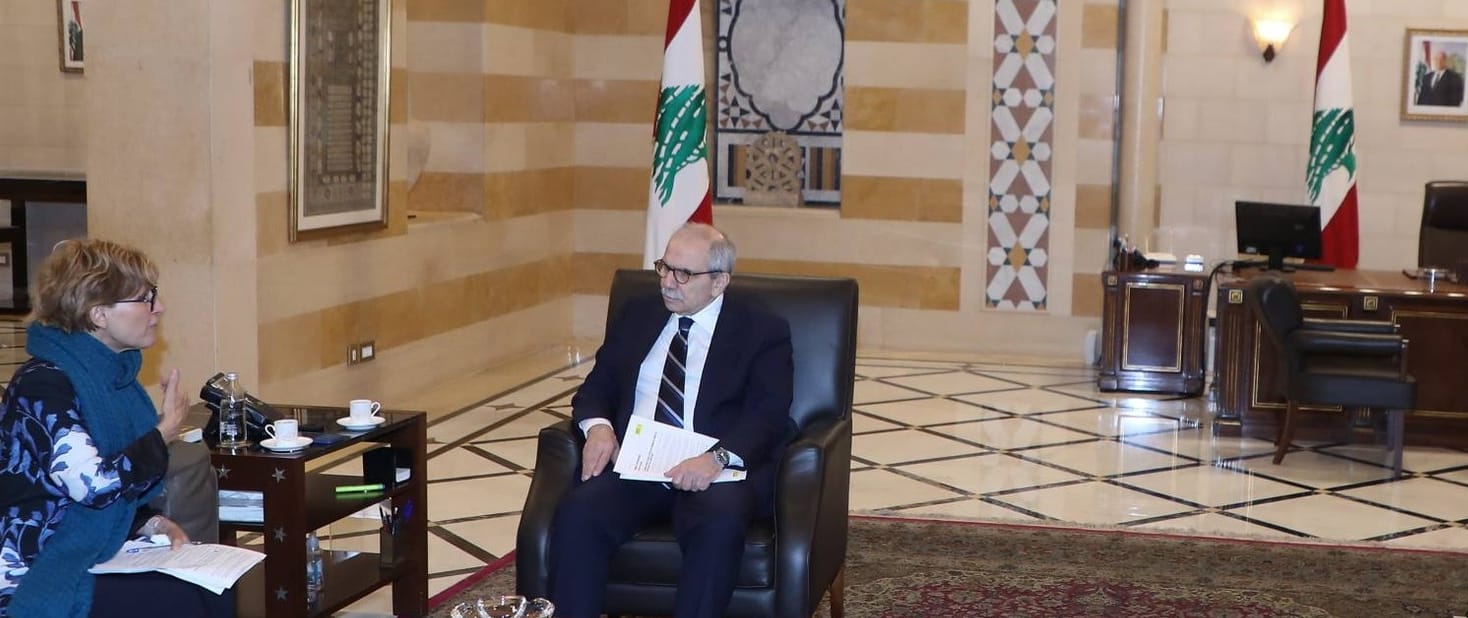
In a high-level visit to Lebanon from 23 to 25 November, Amnesty International’s Secretary General, Agnès Callamard, called on Lebanese authorities to take concrete steps towards accountability for violations of international humanitarian law during the armed conflict with Israel, justice for victims of the Beirut Port explosion, and supporting efforts to strengthen the protection of free expression and civic space.
During the visit, Agnès Callamard met with Prime Minister Nawaf Salam and Minister of Justice Adel Nassar, as well as local human rights defenders and survivors and families of victims of human rights violations.
“Lebanon’s government has a rare and urgent chance to break decisively with years of impunity, mismanagement and abuse – and to put human rights at the centre of its agenda.”
Agnès Callamard, Amnesty International’s Secretary General.
“In just a few years, people in Lebanon have been forced to live through a devastating war with Israel, one of the largest non-nuclear explosions in history, and a brutal economic collapse. The harms continue, and victims are still waiting for those responsible to be held to account,” said Agnès Callamard, Amnesty International’s Secretary General.
“Lebanon’s government has a rare and urgent chance to break decisively with years of impunity, mismanagement and abuse – and to put human rights at the centre of its agenda. In my discussions with Lebanese officials, they expressed a willingness to engage on critical human rights issues. Now, the real test lies in turning those words into action. The government must deliver on its promises – by ensuring the Beirut Port explosion investigation can be delivered free from political interference, taking steps towards holding the Israeli authorities accountable for war crimes committed in Lebanon since October 2023, decriminalising defamation and delivering justice for the victims of political killings– including Lokman Slim – and advancing institutional reforms.”
The visit comes at a critical moment, almost exactly one year after the 27 November 2024 ceasefire that was intended to end large-scale hostilities between Israel and Hezbollah. Despite that ceasefire, Israel has continued to carry out extensive destruction along Lebanon’s borders, conduct attacks inside Lebanon and refused to withdraw from parts of Lebanese territory, while communities in the south remain displaced, living with insecurity, and no human rights-based reconstruction plans in sight.
Justice and accountability for violations of international humanitarian law
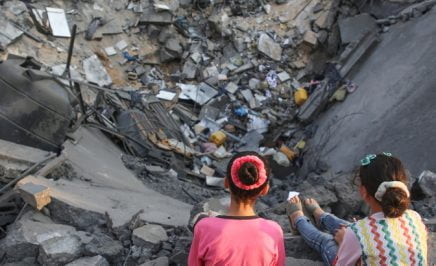
Since October 2023, Amnesty International has documented serious violations by Israeli forces during the war on Lebanon, including unlawful air strikes against civilians and civilian objects that must be investigated as war crimes, the Israeli military’s use of white phosphorous, indiscriminate mass explosions targeting electronic devices, attacks on journalists, health facilities, ambulances and paramedics. Amnesty International has also documented Hezbollah’s firing of unguided rockets into populated civilian areas in Israel.
After the November 2024 ceasefire, the organization also documented how the Israeli military has extensively destroyed and damaged civilian structures and agricultural land in southern Lebanon between 1 October 2024 and 26 January 2025.
To date, the Lebanese government has not taken meaningful steps to ensure accountability, redress, or reparations for victims of violations of international humanitarian law and international crimes committed during the conflict.
“Politics must never stand in the way of justice, truth and reparations.”
Agnès Callamard
“Politics must never stand in the way of justice, truth and reparations. Lebanese authorities should explore every possible avenue for accountability—by initiating credible domestic investigations into alleged war crimes, establishing a registrar for all killings, injuries, and damages, enabling the International Criminal Court to act, and taking concrete steps to secure reparations for affected individuals and communities. Amnesty International also urges the Lebanese government to be a strong voice internationally against the killings of journalists in armed conflicts, and more broadly for the protection of a rule-based order,” said Agnès Callamard.
Justice for victims of the Beirut Port explosion
More than five years after the 4 August 2020 Beirut port explosion — one of the largest non-nuclear blasts in history, which killed at least 236 people, injured over 7,000 and devastated much of Beirut — victims and their families are still waiting for truth and justice. Authorities had repeatedly obstructed the domestic investigation by shielding politicians and officials from accountability.
In January 2025, Judge Tarek Bitar formally resumed his work after a prolonged suspension, issuing new summonses and reopening interrogations of senior security officials. However, the progress of the probe remains uncertain. The organization called on the authorities to protect the path to justice for victims of the Beirut Port explosion by ensuring that the investigation is comprehensive, independent and free from political interference.
“This is a litmus test for Lebanon and a critical moment to restore public trust in the justice system. The families of the victims have shown extraordinary persistence in their search for truth. The Lebanese authorities must finally match that courage with genuine political will,” said Agnès Callamard.
Investigations into political killings
Lebanon has a long history of politically motivated assassinations without effective investigation identifying all perpetrators and holding them accountable. Lokman Slim, an intellectual, publisher, and human rights defender, was killed in Southern Lebanon on 3 February 2021. The investigation into his killing stalled for three years before getting suspended in December 2024. In May this year, a new judge was appointed and she held a hearing session in June.
“We are glad to know that after years of procrastination, there seems to be renewed attention into the investigation into Lokman Slim’s killing. We call on the judicial authorities to ensure this is not another false start and that the investigation will lead to those responsible for the killing, including the masterminds, being charged and held to account,” said Agnès Callamard.
Media law and protection of free expression
Amnesty International remains deeply concerned about the ongoing misuse of criminal defamation and insult provisions to intimidate journalists, activists and citizens who criticize those in power. With Parliament reviewing a revised draft media law, the delegation encouraged authorities to back reforms that abolish prison sentences and pretrial detention for speech-related offenses and replace criminal defamation laws with new civil provisions.
Background
Agnès Callamard is an international human rights expert. A leading advocate for freedom of expression, a feminist, and an anti-racism activist, Dr Callamard has been at the forefront of international efforts to combat some of the greatest human rights challenges of our time. She was appointed Secretary General of Amnesty International in 2021, having previously worked as the United Nations Special Rapporteur on extra-judicial, summary or arbitrary executions.
Amnesty International is a global movement of more than 10 million people who take injustice personally. We are campaigning for a world where human rights are enjoyed by all – and we can only do it with your support.
Act now or learn more about our human rights work.