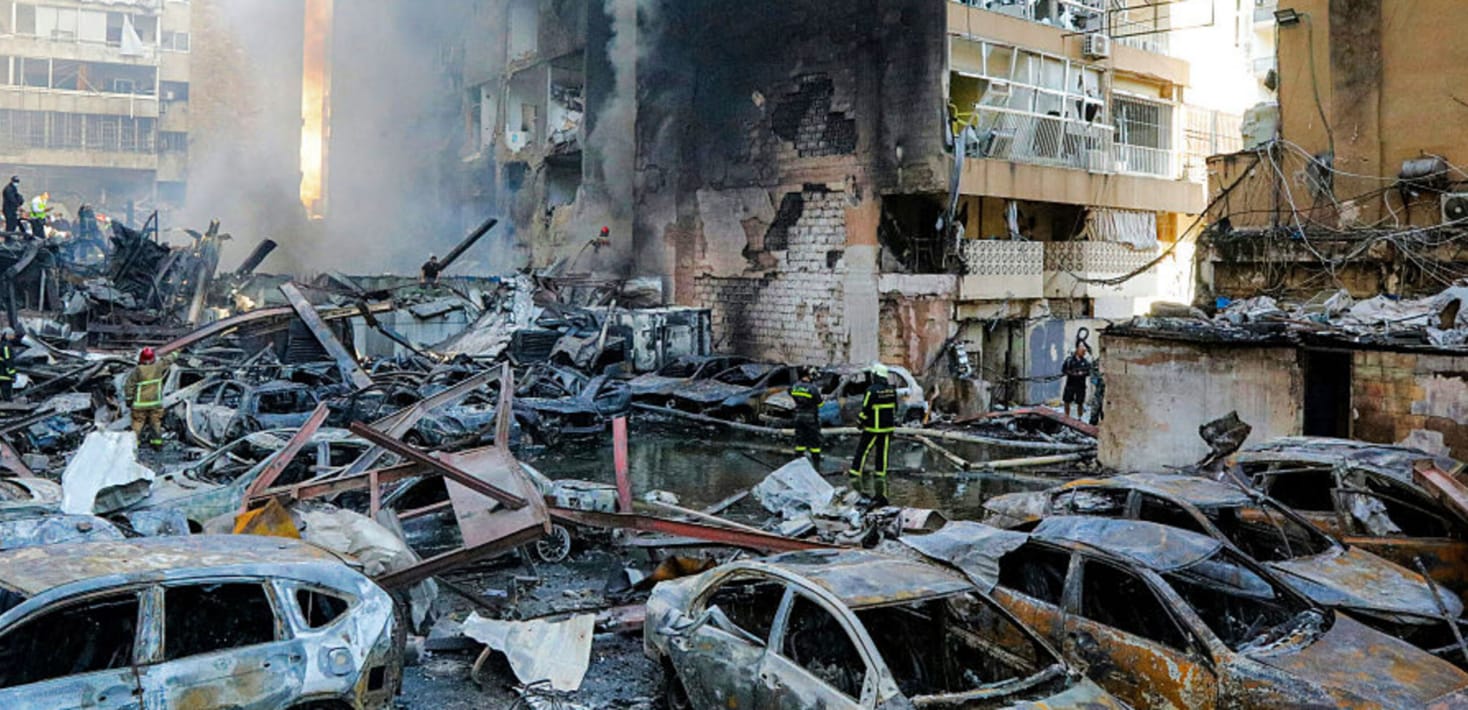
Responding to the unprecedented escalation by the Israeli military which said it conducted the “largest coordinated wave of strikes” today attacking 100 sites across Lebanon within 10 minutes, killing and wounding hundreds
Amnesty International’s Regional Director for the Middle East and North Africa, Heba Morayef said:
“Just hours after the world cautiously welcomed news of a US-Israeli ceasefire with Iran, in Lebanon the nightmare for civilians has become more terrifying. Today has been the deadliest day since the latest round of fighting began on 2 March with an intense barrage of air strikes carried out across south Lebanon, the Beqaa valley and in crowded civilian areas in central Beirut – many without warning. Hospitals have put out calls for blood donations, overwhelmed by the number of injured arriving.
“Even before today’s attack, which the Israeli military referred to as operation ‘Eternal Darkness’, more than 1,500 people had been killed and over a million people displaced from their homes across the country. Civilians in Lebanon are already paying an unbearable price with children, health workers and journalists amongst those killed – the latest attacks will only escalate this devastating human toll.
“Civilians in Lebanon are already paying an unbearable price with children, health workers and journalists amongst those killed – the latest attacks will only escalate this devastating human toll.”
Amnesty International’s Regional Director for the Middle East and North Africa, Heba Morayef
“We reiterate the urgent need Israel to uphold its obligations under international humanitarian law and ensure civilians are protected. Israel has an appalling track record of carrying out unlawful attacks in Lebanon and displaying a callous disregard for civilian life, fueled by the impunity Israeli officials feel they enjoy.
“The recent warning from the Israeli military spokesperson that Hezbollah has repositioned from the southern suburbs of Beirut to north Beirut and mixed areas of the city has raised fears of further attacks in civilian areas. Israeli forces are bound by their obligations under international humanitarian law to distinguish between civilians and military objectives and to categorically refrain from carrying out direct attacks on civilians and civilian objects, indiscriminate, disproportionate attacks.
“They are required to take all feasible precautions to minimize harm to civilians and civilian infrastructure, including by avoiding the use of explosive weapons with wide-area effects in densely populated residential areas. Failure to uphold these obligations constitutes a serious violation of international law and places civilian lives in imminent danger.
“These attacks are a reminder that states must immediately halt the transfer of arms and weapons to Israel given the overriding risk that they will be used to commit serious violations of international humanitarian law.”
“I grabbed my laptop and rushed to the street. It was apocalyptic. Bodies on the ground. Blood everywhere.”
Fatima, an eyewitness to one of the strikes
Fatima, an eyewitness to one of the strikes described the devastating scenes after an attack struck the building across the road from her house in Salim Salam, Beirut:
“I grabbed my laptop and rushed to the street. It was apocalyptic. Bodies on the ground. Blood everywhere. I saw countless wounded adults and children. I walked further but it was the same scene in the other neighbourhoods too. I did not know where to go. I just walked aimlessly trying to get as far as possible. It was a nightmare.”
Background
On 8 April the Israeli military issued evacuation warnings for the southern suburbs of Beirut, the city of Tyre and reiterated mass evacuation orders to north of the Zahrani River.
At around 2:30pm, within just 10 minutes the Israeli military launched a series of attacks on at least 48 areas, including on crowded residential neighbourhoods and civilian infrastructure, in the south of Lebanon, north of Lebanon, Mount Lebanon, Bekaa, Beirut suburbs and central Beirut.
The Israeli military said that it had conducted coordinated strikes targeting “100 Hezbollah command centers and military sites” located “within the heart of the civilian population”. Israeli Defence Minister Israel Katz described the attacks as “the largest concentrated blow Hezbollah has suffered since the pagers operation”.
Since 2024, Amnesty International has documented the Israeli military’s use of white phosphorus, and indiscriminate mass explosions targeting electronic devices. Israeli attacks in Lebanon have had a significant civilian toll and have included unlawful airstrikes on residential neighbourhoods as well as attacks on journalists, health facilities, ambulances and paramedics.
The organization also highlighted how the Israeli military extensively destroyed and damaged civilian structures and agricultural land in southern Lebanon between 1 October 2024 and 26 January 2025, continuing well after the November 2024 ceasefire. Amnesty International has also documented Hezbollah’s unlawful firing of unguided rockets into populated civilian areas in Israel, leading to the death and injury of civilians and the destruction of civilian homes.
Amnesty International is a global movement of more than 10 million people who take injustice personally. We are campaigning for a world where human rights are enjoyed by all – and we can only do it with your support.
Act now or learn more about our human rights work.