By Boram Jang, East Asia Researcher at Amnesty International
Like every schoolchild in South Korea, I was taught about the days in May 1980 when our country’s soldiers killed civilians in the Gwangju Democratic Uprising. At least 166 protesters — mostly students — were shot dead, and at the time there were no consequences for those responsible.
One year ago — on Dec. 3 last year, when South Korea’s then-President Yoon Suk Yeol declared martial law and deployed troops to the National Assembly — that lesson helped save the country’s constitutional order. In just six hours.
Not because of courts or international intervention, but because of citizens, including soldiers and lawmakers, who had all been taught the same thing: Power must answer to the people. And it’s a lesson that can be learned by countries under authoritarian threat worldwide.
After democratization in 1987, South Korea began the painful work of reckoning, centered on truth and accountability. In 1996, two former presidents were tried and imprisoned for their roles in the supression of the Gwangju Uprising. Truth commissions documented the killings, schools taught this history, and memorials were built. The process was imperfect, but it fundamentally succeeded in breaking the cycle of impunity. The principle that power must answer to the people became enforceable, not aspirational.
When my generation learned about Gwangju, we absorbed a powerful collective memory of state wrongdoing and the principle that such crimes must never go unpunished.
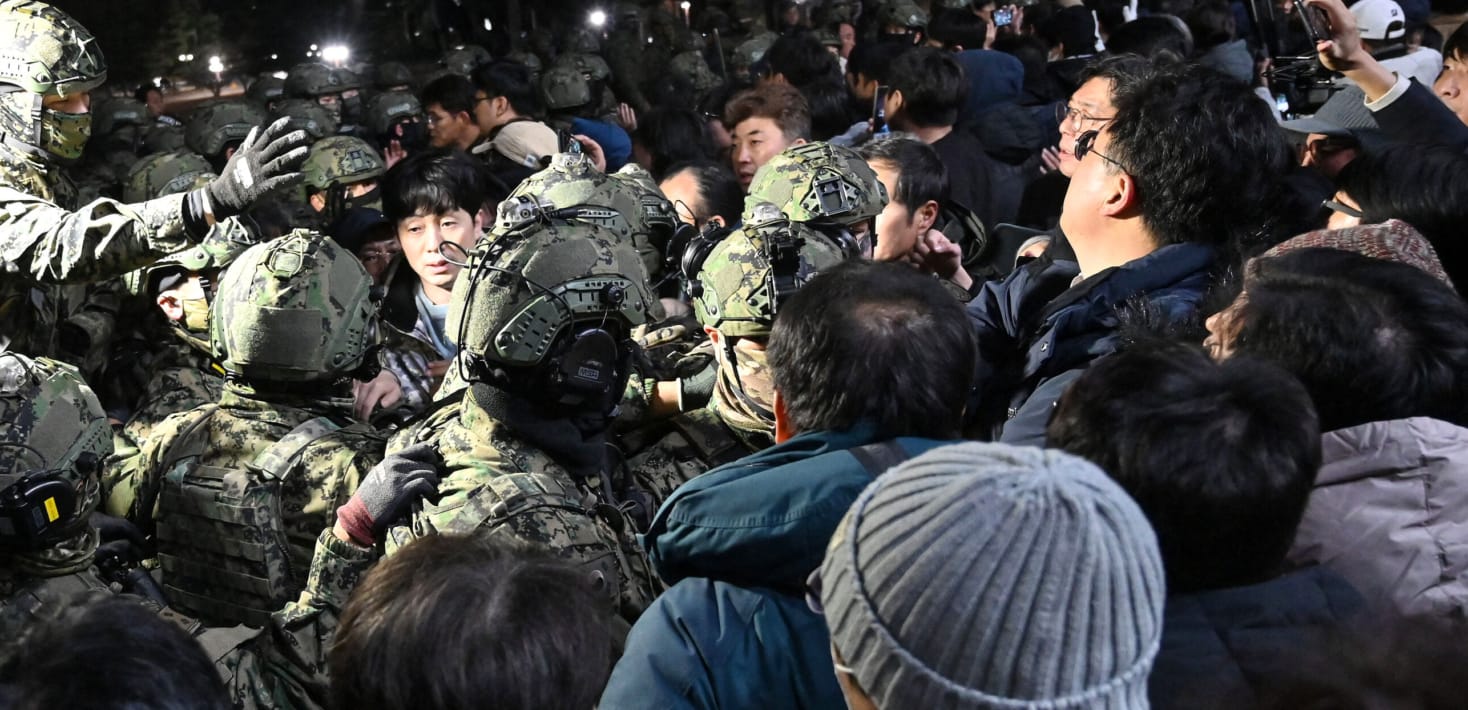
At around 10:30 p.m. on Dec. 3, Yoon declared martial law on television and deployed soldiers to storm and barricade the National Assembly. It was the first such declaration since the end of military rule. Within minutes, thousands of citizens began marching towards parliament. What followed showed the strength built over four decades of work towards accountability.
While parts of the military did follow the orders, several officers who received orders to move toward the National Assembly hesitated or refused. It has since been reported that one senior officer instructed his unit not to cross the bridge to Yeouido, where the Assembly sits, and not to harm civilians. Nine months later, the Ministry of National Defense honored 15 service members for refusing or delaying unlawful orders. These soldiers were “citizens in uniform” — even though their decision to defy a presidential command carried personal risks, they chose to act on the lessons of Gwangju to ward off an unacceptable abuse of power.
Civilians poured into the streets. Thousands of people blocked military vehicles and helped lawmakers climb over walls when police barricaded the gates. They remained through the freezing December night, phones out, livestreaming everything. They weren’t guaranteed safety, but these individuals — including my friends — had seen the need to bear witness and knew this was critical for accountability.
Lawmakers understood that their duty was to the people, not the presidential office. At about 1 a.m. 190 lawmakers voted unanimously to lift martial law. This included opposition members and 18 from the president’s party. Under South Korea’s constitution, parliament’s demand could not be refused. By dawn, martial law was lifted. Six hours from start to finish.
The resistance worked because 40 years of reckoning had proven that the principle of accountability carries real force.
The soldiers and officers who refused orders weren’t just being moral; they were making judgments shaped by decades of accountability. They knew from the Gwangju trials that the era of executive impunity for unlawful orders had ended. They assumed that the constitutional system ultimately sets fidelity to the rule of law higher than blindly following superiors. Justice, they had learned, might be slow, but it would arrive.
Those who defended parliament a year ago believed they had the right to check their government, and they had evidence. After Gwangju, families who demanded truth received some, prosecutors who charged presidents kept their positions, and courts that convicted the powerful remained independent.
This wasn’t faith in the abstract but trust built on observable reality. Dictators had served time, courts functioned under pressure, and through years of incomplete justice and civic effort, accountability became tangible.
South Korea’s reckoning remains unfinished. Former President Yoon now stands on criminal trial, many questions about the military and police remain open, and political divisions run deep.
But that night demonstrated something essential for countries facing authoritarian pressure. Accountability cannot remain rhetorical but must be demonstrated through concrete action, even when imperfect. This is the ultimate guarantee of non-recurrence.
This requires prosecuting leaders who commit crimes, no matter their stature. It means protecting those who demand answers, not intimidating them into silence. It means teaching what happens when this principle fails and when it succeeds. It means showing that standing against overreach protects the system rather than destabilizes it.
The resistance shown that night held because each actor, from “citizens in uniform” to everyday citizens to elected officials, operated in a system where accountability had proven real. They had seen accountability work, despite its flaws. We trusted it would work again.
South Korea built that public trust through 40 years of struggle and accountability, from the classroom to the highest corridors of power. When tested, it held. And with authoritarian practices expanding globally, it’s a lesson that has rarely seemed more relevant.
Originally published in The Korea Herald.
Amnesty International is a global movement of more than 10 million people who take injustice personally. We are campaigning for a world where human rights are enjoyed by all – and we can only do it with your support.
Act now or learn more about our human rights work.