Amnesty International Australia welcomes the NSW Supreme Court’s decision to strike down laws passed by the NSW Parliament that posed a serious threat to fundamental civil and political rights.
The laws were challenged by three activist groups, Palestine Action Group, Blak Caucus, and Jews Against the Occupation ‘48, in early January. The Court found that the law impermissibly burdened the implied constitutional freedom of political communication.
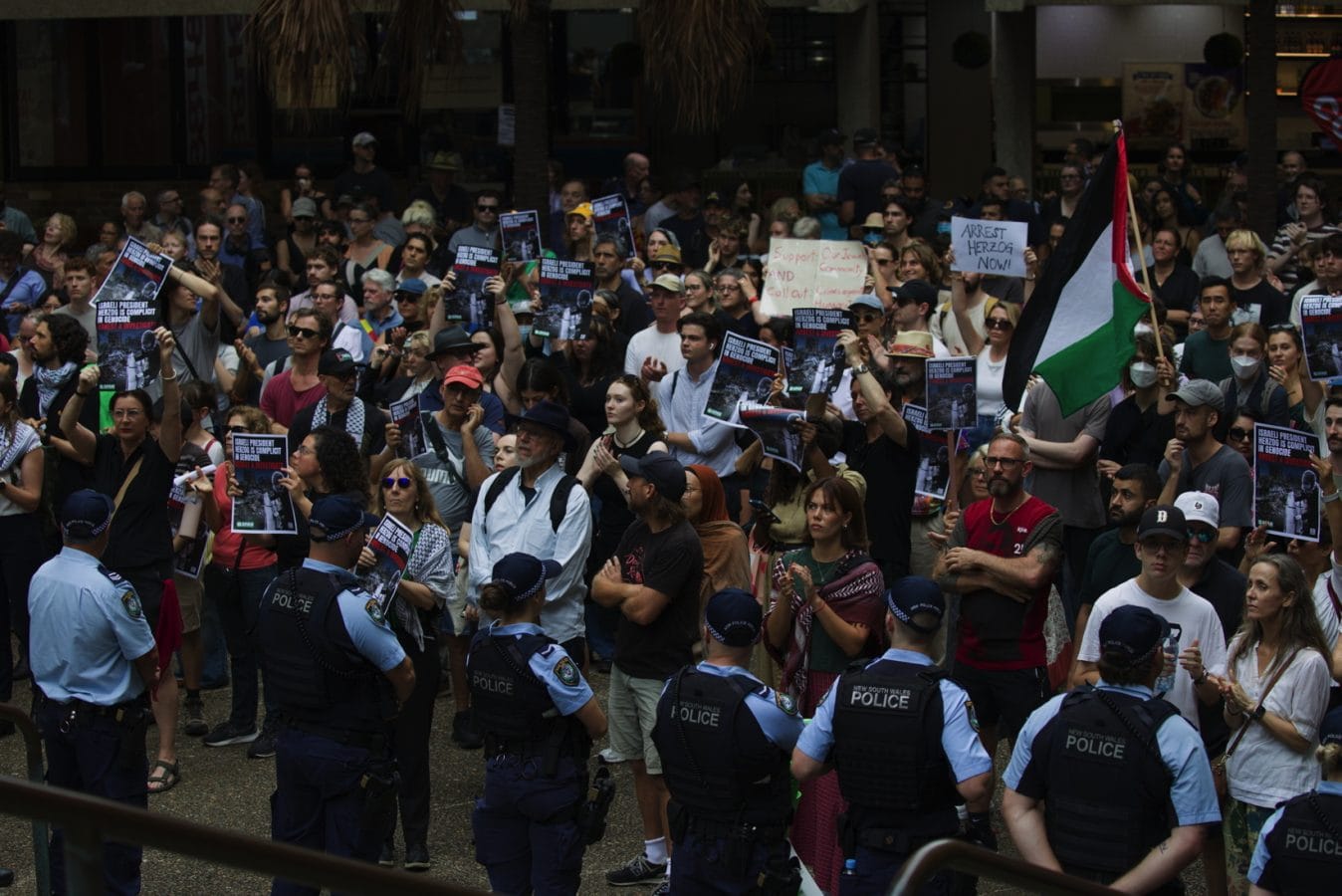
The legislation had been rushed through Parliament in response to the Bondi terrorist attack, without being subject to scrutiny, granting police expanded powers to restrict marches and enabling the arbitrary and state-sanctioned violence against protestors, as seen in the police brutality at the anti-Herzog rally earlier this year.
“The NSW Supreme Court’s ruling is a testament to people power and collective action. Amnesty International Australia thanks the plaintiffs for bringing this judicial challenge, and for affirming that knee-jerk responses by governments that crackdown on fundamental rights have no place in a democracy,” Mohamed Duar, Amnesty International Australia’s Occupied Palestinian Territory Spokesperson said.
“This decision is a significant win for civil and political rights, particularly for the hundreds of thousands of Australians who have taken to the streets to demand an end to Israel’s genocide against Palestinians in Gaza, an end to the brutal, unlawful occupation and apartheid regime.”
Mohamed Duar, Amnesty International Australia’s Occupied Palestinian Territory Spokesperson
“The right to protest is protected under international law. This decision is a significant win for civil and political rights, particularly for the hundreds of thousands of Australians who have taken to the streets to demand an end to Israel’s genocide against Palestinians in Gaza, an end to the brutal, unlawful occupation and apartheid regime.”
The law is one of several anti-protest laws that have been struck down by the courts in recent years. Amnesty International Australia urges State governments with similar laws to repeal them and instead protect people’s right to protest. Repressive laws introduced by governments around the world that restrict protest must be rejected. France’s Yadan bill, set to be debated in the French National Assembly on April 16-17, which purports to ‘combat renewed forms of antisemitism’, risks curtailing fundamental rights and must be dismissed.
Background
The law, which passed in NSW Parliament in December 2025, allowed the Police Commissioner to issue ‘Public Assembly Restriction Declarations’ to prohibit public assemblies in designated areas. Assemblies subject to such declarations were deemed unauthorised by default, granting police broad discretionary powers.
In February, around 10,000 people gathered in Sydney to protest Israeli President, Isaac Herzog’s visit, demanding justice and accountability. Protestors were met with excessive, unnecessary and disproportionate force by NSW police, resulting in multiple arrests and injuries. Those targeted included members of already marginalised communities, including First Nations Peoples, Muslim worshippers and leaders, elderly and youth protestors.
These anti-protest laws form part of a broader global erosion of freedom of expression in recent years. In Australia, this has included restrictions on protest locations, expanded police powers, and attempts to ban certain political expressions across New South Wales, Queensland and Victoria.
Amnesty International is a global movement of more than 10 million people who take injustice personally. We are campaigning for a world where human rights are enjoyed by all – and we can only do it with your support.
Act now or learn more about our human rights work.