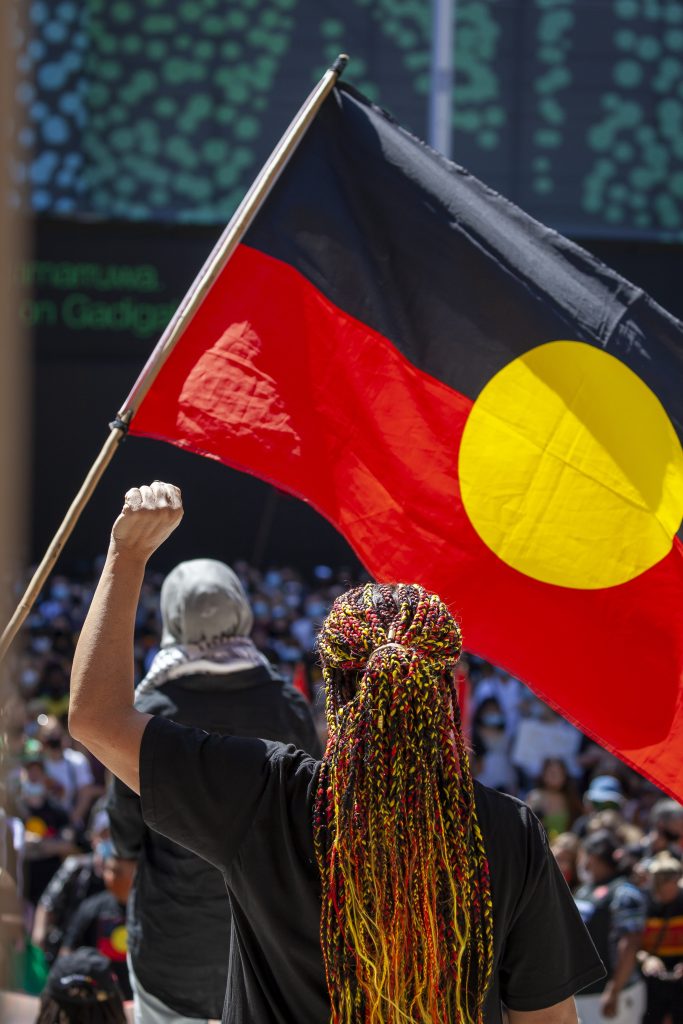
For Aboriginal and Torres Strait Islander communities January 26 is a day of mourning, marking the start of the invasion and colonisation of this country, the mass genocide of First Nations peoples, and the dispossession of cultural practices, language and Country. First Nations communities have different names for January 26, including Invasion Day, Survival Day and Day of Mourning.
Invasion Day is an important time to stand in solidarity with First Nations people in their calls for justice on this land. It’s a time to listen to the community, to truth-telling, and to answer the calls for support.
What’s Inside the Invasion Day 2026 Activist Toolkit:
- The Indigenous Rights team’s Calls to Action
- How to find out what events are planned for your community
- Info about Amnesty’s current Indigenous Rights campaign
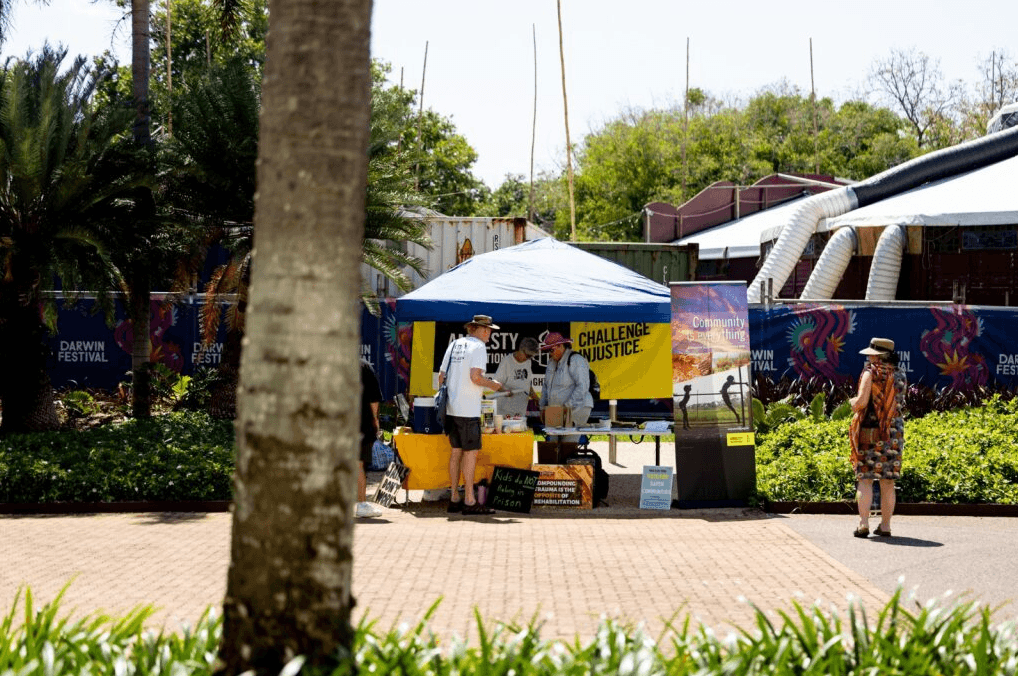
- How to host a youth justice stall at an Invasion Day Rally, Survival Day Celebration, or event
- How to organise an Amnesty contingent for Invasion Day/Survival Day rallies
- Tips on hosting a banner creating workshop
- Info about our Naarm Invasion Day Banner Painting Workshop and how to RSVP
Calls to Action:
This year, the Indigenous Rights team have 3 calls to action for Amnesty activist groups:
- Host an Invasion Day banner creation workshop in the lead up to Invasion Day
- Host a youth justice information stall at your local Invasion Day Rally, Survival Day Celebration, or event (if appropriate – please check with the local First Nations community)
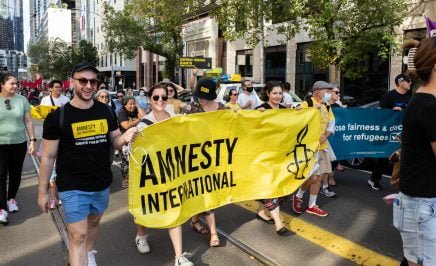
- Organise an Amnesty contingent for Invasion Day/Survival Day rallies
First Nations communities are self-determined, resilient and resourceful in their fight for Indigenous rights, and it’s important for us to respectfully find ways to support their work.
The best way to do this is to make sure that we are constantly striving to build genuine, honest and meaningful relationships with First Nations Elders and community groups in all the local areas that we campaign in. That way, we can reach out to them and ask if there is a way we can support their work and amplify their voices, whilst being culturally safe in our approach.
How do you know if it’s appropriate to campaign at your local Invasion Day Rally, Survival Day Celebration, or event?
- Please check with the local First Nations community first
- If you’re attending a protest, follow the lead from the protest organisers to amplify their calls. Sometimes it’s helpful to bring Amnesty branding to show our movement’s support, and sometimes it’s best to attend without branding. Be led by the instructions from the protest organisers and if in doubt, reach out to ask.
- If a community event has the option to apply for a stall, this could be an opportunity to host a campaign stall, where you ask stall-visitors to sign our petition to end torturous practices. Check the stall guidelines from the event organisers and if in doubt reach out to ask. It could be a great opportunity to build relationships with local First Nations leaders, activists and other stall-holders.
How do you find out what’s planned for your local community?
ANTAR has a great list of Invasion Day events happening in each state, and rally organisers may also list event information on Facebook community pages or Instagram.
You could also ask your local council to link you with the First Nations Elders and community groups in the region. If you’re not sure where to start, here is a First Nations community mapping tool that will help you work out who to reach out to in your local community to see what they are organising.
Info about Amnesty’s current Indigenous Rights campaign
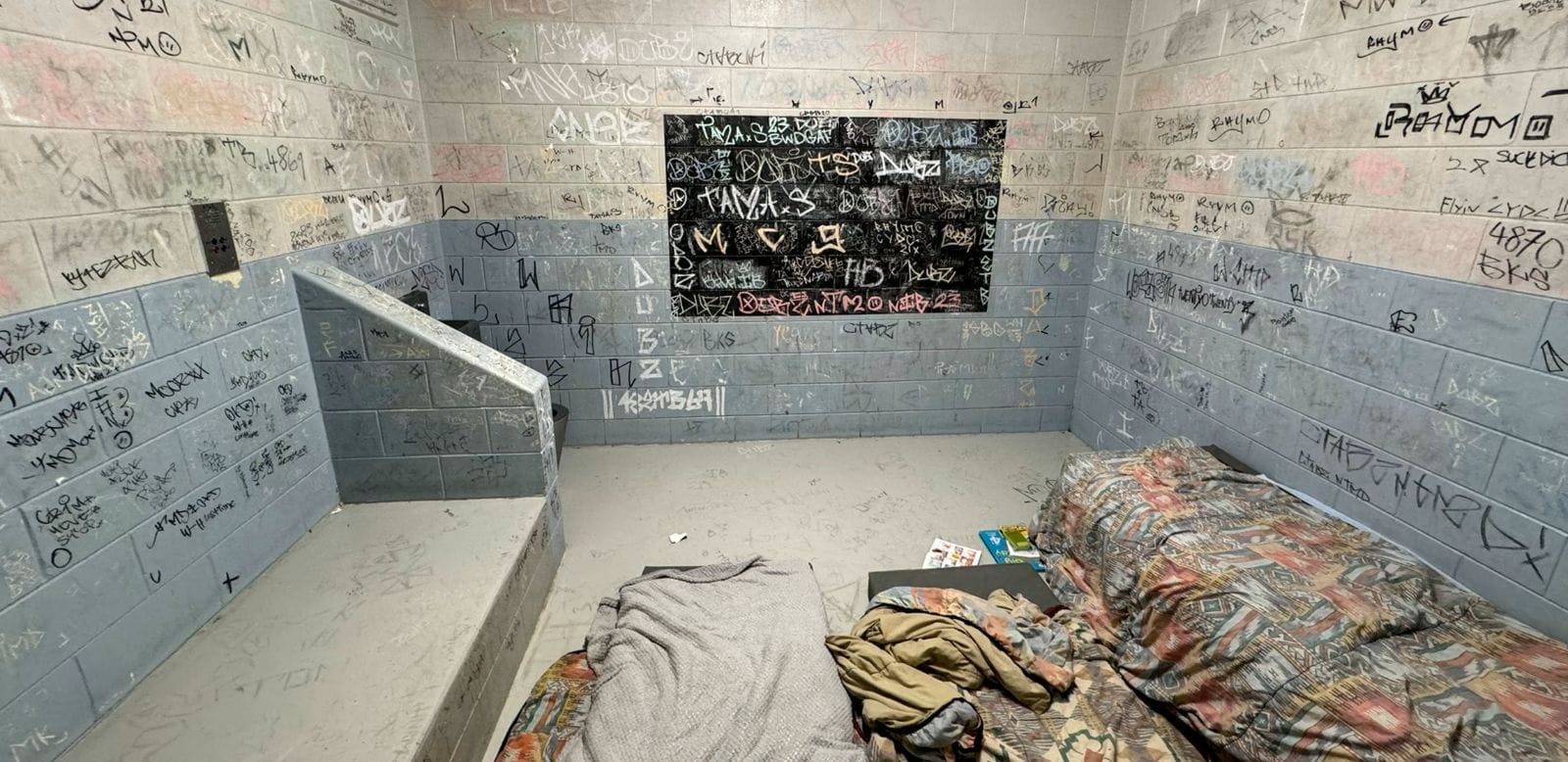
Around Australia, children from the age of 10 can be incarcerated. Many of these children have a cognitive or neurological disability, and are exposed to really traumatic experiences and environments, as well as torturous practices such as dangerous spithoods, often while they are being held in remand – i.e. they haven’t been found guilty of a crime and are awaiting their trial.
Amnesty’s Indigenous Rights team will be launching our new Youth Justice Campaign Strategy 2026-2030 in the first half of this year. Our focus states will be VIC, NT and QLD, where we will be campaigning to end the youth incarceration crisis that predominantly and disproportionately affects First Nations children, advocating for systemic and political reform.
What we are calling for:
- All State and Territory Governments must raise the minimum age of criminal responsibility to at least 14, in line with international standards.
- End the use of torturous practices in youth detention, including isolation, prolonged lockdowns, restraints and other inhumane and cruel treatment.
- Investment in First Nations-led justice reinvestment initiatives and culturally safe, community-driven solutions that strengthen families and keep children out of the justice system
- An end to the use of torturous practices such as spit hoods and detaining kids in adult watch houses.
- A national youth justice framework
Current Petitions
- National petition to end torturous practices
- Northern Territory petition
- Queensland petition
- Victoria petition
Hosting a youth justice stall at an Invasion Day Rally, Survival Day Celebration, or event
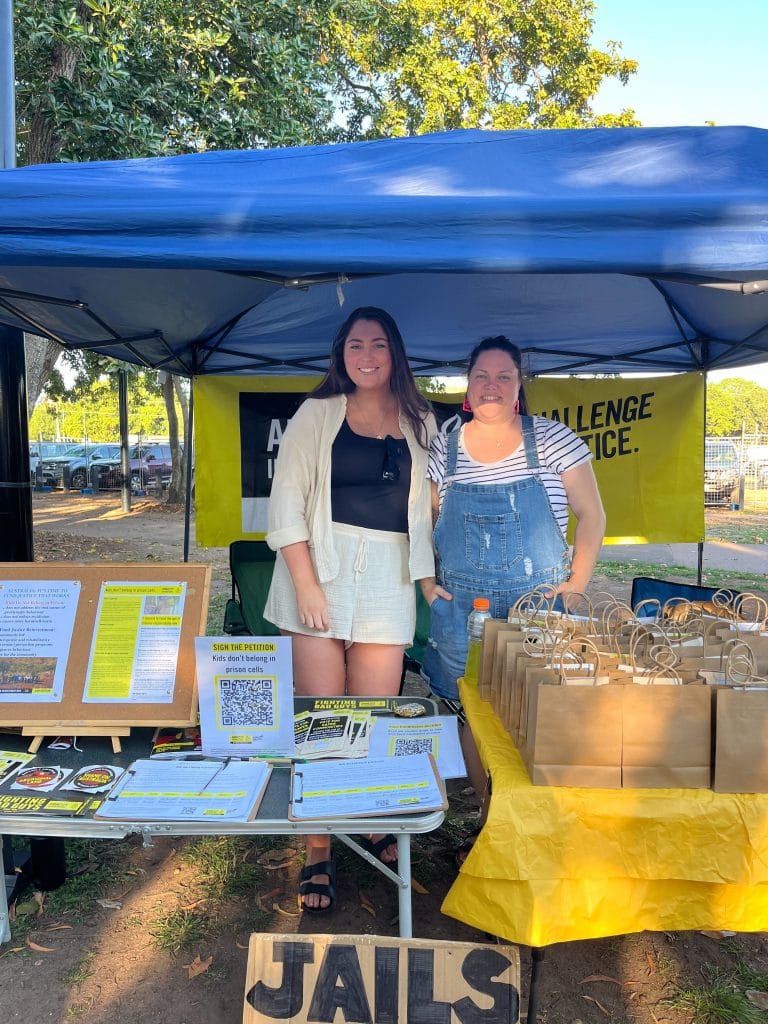
Hosting a stall is a great way to raise awareness about the campaign and help build the people power needed to create the change we seek. You encourage people passing by to come speak with you and ask them to get involved in some way, usually by signing a petition. These are usually quick to organise, you can contact a local event where there will be stalls to ask for a space. It’s best to have a single ask that people can do fast, such as signing a petition. For those people who seem quite engaged and interested you can also have follow up actions such as inviting them to sign up to your mailing list, come along to your next event, or join your group.
Set some goals for your stall. It’s good to have a primary goal as your main focus and then some additional nice-to-have goals.
Here are some of the many goals you could use for a wide range of events:
- Inspiring people to join our movement and building the profile of Amnesty in the community.
- Recruiting people who will commit to mobilise at a later date.
- Recruiting new members to your team to help support or coordinate activities.
- Providing development opportunities for team members to learn new skills.
- Encouraging people to take action on a campaign or donate money.
- Building relationships with other community leaders, organisations and groups.
- Participating or partnering with others on events they are coordinating
Example goals for a Youth Justice Stall
Primary goal:
- 150 signatures on the national petition to end torturous practices (the goal number will depend on the size and type of event you are attending)
Secondary goals:
- 50 signatures on your state-based petition to end torturous practices
- 10 new group signups
- Swap contact details with a First Nations community group or organisation present that may have shared values / interests
- 3 high-quality photos to share your efforts on social media and with the Amnesty movement (ensure you ask permission and have people sign a media consent form if their faces are featured in the photo)
How does collecting petition signatures contribute to the campaign?
Petitions work because collective voices force accountability. When thousands of us demand action together, governments listen. Change happens when we make inaction impossible to ignore.
Additionally, petitions help to create a base of supporters for the campaign, so that we can continue to engage with them and provide opportunities to take deeper actions that have even greater impact. Signing a petition could be the first step someone takes on their journey to becoming an activist. This is why the conversations you have can be so powerful.
Planning & Logistics
- Make sure you log your event so that we can provide any support, promote it on the website, and that it’s covered under our Public Liability Insurance. Log your event on SupporterBase or by using this form. You can also email activism@amnesty.org.au
- For information about the event support that is available, such as funding, merchandise, photography, visit the Host an Event page
- Use this checklist to help determine what other tasks are important for your event preparation, during your event, and after
- Have at least two people to staff your stall at all times
- It can be a good idea to create a run sheet for your volunteers with key information such as event information, volunteer schedule and contact details, your goals, & key information about the campaign.
Consider how much guidance your volunteers need to have conversations about the campaign & how you will support them. Do you need to share some resources with them in advance to read through such as the online petition pages? Do you need to have a pre-event session to practice having conversations about the campaign? You can find some guidance in this resource on having structured conversations about campaigns.
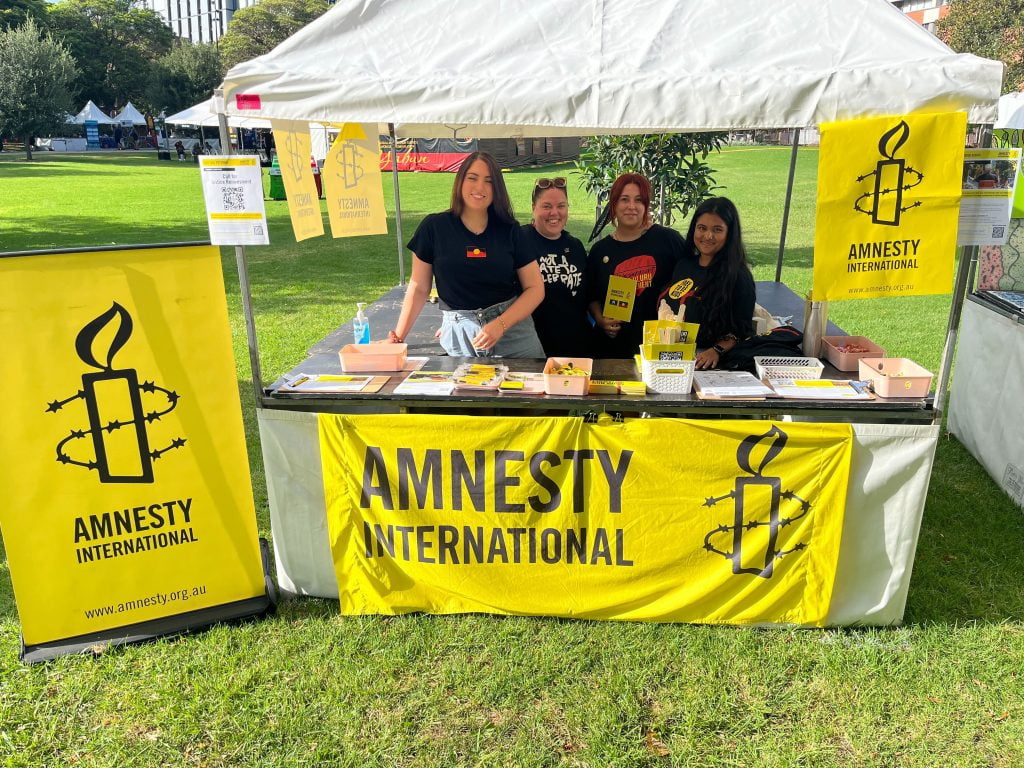
Reassure your volunteers that they don’t need to be an expert on the issue and that if they get asked a question they don’t know the answer to, it’s ok to say ‘I don’t know’ and direct them to the Amnesty website for more information (amnesty.org.au).
Tips and Tricks for your stall
- Keep your action really clear by not over displaying materials (you can keep extra copies under the table and restock as they are used). Using different heights to display your materials can help make it look more visually appealing.
- Go through the main messages of the campaign you are working on with the volunteers and practice saying a few of them with each other as if you were trying to communicate the campaign to a member of the public and then encourage them to take action
- Use Amnesty banners or posters to draw attention to your stall
- Sometimes an activity can help bring more people into the stall such as a craft activity, or you can use the merchandise giveaways to help attract people eg. ask if they want a sticker or temporary tattoo and then invite them to sign the petition
- Consider the weather and be prepared
- Collect the petitions and have a process for getting them to their destination (petitions are returned to the Gadigal Action Centre, you will find the address at the bottom of the petition page). Before posting them off consider adding those people to your SupporterBase list so that you can invite them to stay connected with your group.
- Collect the sign-up sheets and have a process for adding those people to SupporterBase and contacting them with information about your next meeting, event or inviting them to a coffee catch-up to learn more about your group.
- Debrief with your team at the end of the event & celebrate everyone’s hard work. At the next group meeting find some time to discuss how the event went. Evaluate and feedback any learnings.
Resources to bring along:
Offline petitions you can print:
- Stickers and temporary tattoos are available at the Gadigal Action Centre – please see information below about how to order some for your group
- If you aren’t able to host a banner painting workshop, here are some posters that you can print.
- Group sign-up sheet and printed QR code to your group signup page
Ordering stickers, temporary tattoos and other supplies from Amnesty’s Gadigal Action Centre
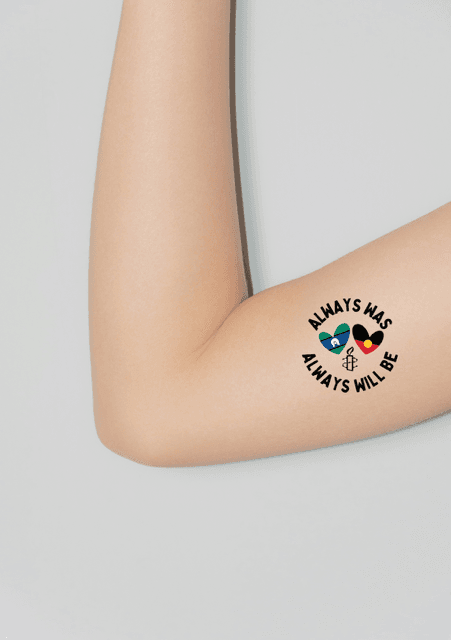
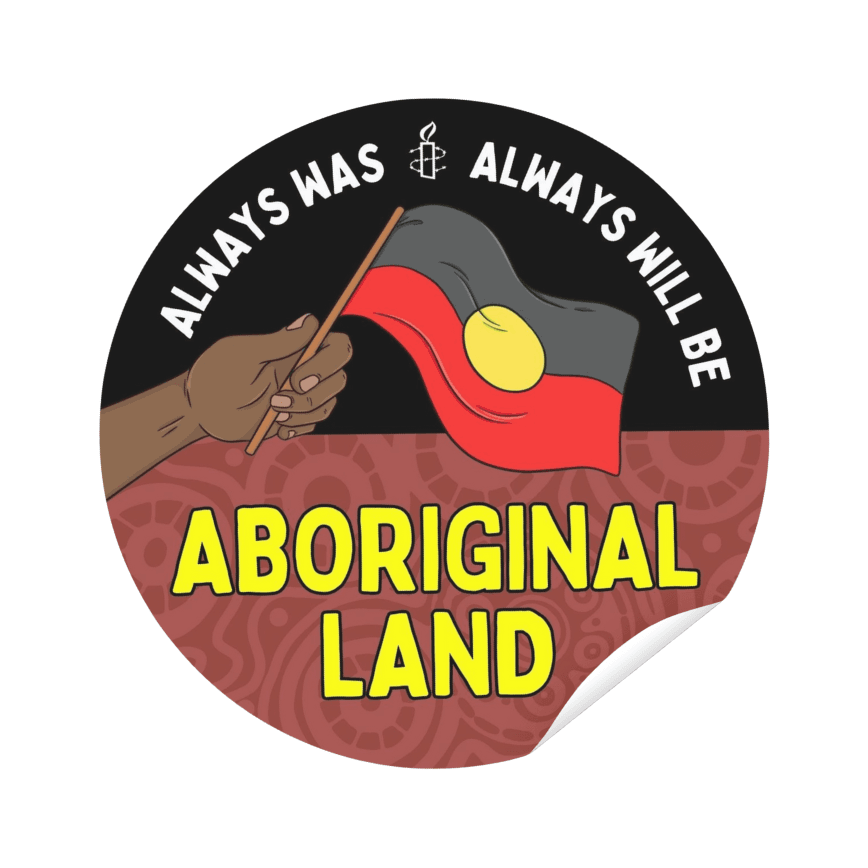
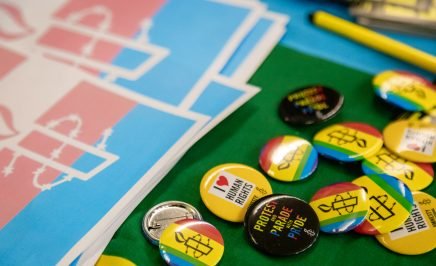
Always Was Always Will Be stickers and temporary tattoos are available to order from the Gadigal Action Centre, for those groups who are able to host an info stall at an Invasion Day rally, Survival Day Celebration, or event.
To order stickers or temporary tattoos from Amnesty, please contact us at activism@amnesty.org.au.
Please provide your name, action group name, best postal address and approximate number of merch items you require for your event.
Please check your bulk merch packs for any spare supplies.
If you would like to request any materials, please do so no later than: 19th of January.
All merch packs will be express posted from the Gadigal Action Centre based in Chippendale, Sydney.
Organising an Amnesty contingent for Invasion Day/Survival Day rallies
Organising a group of people to attend your local rally is a great way to stand in solidarity with First Nations communities. It can also help people who haven’t been to a rally before feel more confident to attend and help grow the movement for Indigenous Justice.
Make sure you log your contingent so that we can provide any support and promote it on the website. Log your contingent on SupporterBase or by using this form. You can also email activism@amnesty.org.au
Things to consider:
- Follow the guidance from the rally organisers about whether to bring Amnesty branding or not (such as banners). If in doubt you can reach out to ask the organisers what they prefer.
- Make a plan for where to meet and how to find each other if you get lost or separated
- If you have new people coming along, consider their comfort level and offer to pair them up with a buddy, or have the contingent meet somewhere quiet close by so you can all walk in together
- Consider the weather and prepare accordingly
- Take pictures (if culturally appropriate) to share online and with us at activism@amnesty.org.au If sharing on social media tag @amnestyaustralia. It’s preferable that the photos we take of the public are as non-identifiable as possible, from the back of a crowd, and none with children’s faces.
- Read our guide on how to stay safe at a protest
- If you had new people come along, add them to your SupporterBase list and make a plan to get them involved further such as inviting them to your next meeting, event or to a coffee catch-up to learn more about your group.
Hosting a banner creating workshop
Hosting a banner creating workshop is a great way to bring likeminded people together, enjoy an afternoon or evening of creative activism (while listening to the Amnesty ‘From the Beginning’ playlist) – and it also provides an opportunity for people to build community connections before hitting the streets on Invasion Day.
Pick a date and time, find a space, gather some craft supplies, and create a flyer to get the word out!
(tip: Bunnings has lots of boxes and cardboard available for free, to use as a base for your banner)
- Make sure you log your event so that we can provide any support, promote it on the website, and that it’s covered under our Public Liability Insurance. Log your event on SupporterBase or by using this form. You can also email activism@amnesty.org.au
- For information about the event support that is available, such as funding, merchandise, photography, visit the Host an Event page
- Use this checklist to help determine what other tasks are important for your event preparation, during your event, and after
Banner slogan ideas:
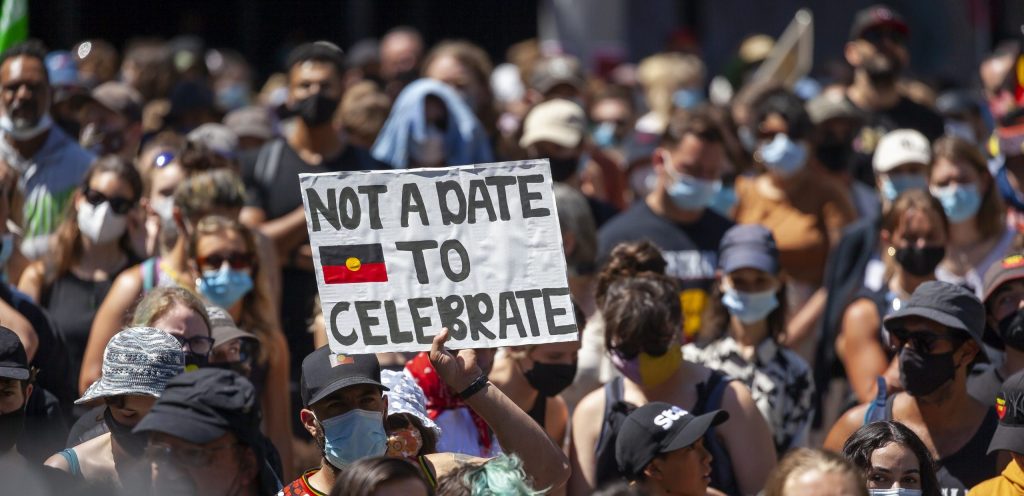
- Not a date to celebrate
- Kids on Country, not in cells
- Always Was, Always Will Be
- No pride in genocide
- You’re standing on stolen land
- Kids don’t belong in prison
Naarm Invasion Day Banner Painting Workshop
Come and join Amnesty International’s Indigenous Rights Team for an evening of creative activism, where we’ll be painting banners to take to the Naarm Invasion/Survival Day rally.
WHEN: January 23, 2026 at 4:00pm – 7:00pm
WHERE: Amnesty Naarm Action Centre, 7/134 Cambridge St, Collingwood
What to expect:
- Pizza dinner 🍕
- Lucky door prize from Clothing the Gaps 🎁 (bonus entry for you if you bring along friend)
- All material to create your own personal banner supplied (cardboard, paints, paint brushes, etc)
- Creative inspo!
What to bring: you and a friend! We’ll provide all the material.
Invasion Day FAQs
Three quick questions answered for you by Amnesty’s Indigenous Rights Team:
Should we change the date, save the date or cancel it all together?
Changing the date will not fix anything – however this is the first and very necessary step towards abolishing Australia Day and the true reckoning that this country needs to have with the injustices that continue to cause suffering today.
First Nations communities are diverse, and as such, there are a range of views about this date. Some Aboriginal and Torres Strait Islander peoples call for the date to be changed, some would prefer January 26 to be renamed and reframed as a Day of Mourning – and others call for the Australia Day to be abolished.
The effects of colonisation are still being experienced by First Nations peoples today, because the way we do things in Australia hasn’t changed. The colonial systems which were designed to benefit settlers and disclude First Nations communities remain in place. These have caused intergenerational trauma and are still having a negative impact on the social outcomes for mob today.
Let’s look at the education system: it was designed from a colonial perspective, sitting in classrooms, reading books written in English, taught by teachers speaking English, and schedules kept by colonial timekeeping methods. And only in very recent times are First Nations languages and perspectives starting to be included in the curriculum. The negative impact of this on Aboriginal and Torres Strait Islander kids throughout the generations has been huge, and this is only looking at one system within our society. Other systems such as health, employment and housing have also excluded and negatively impacted on mob since colonisation.
So, even if Australia did change the date, there is nothing to celebrate until First Nations peoples enjoy the same social justice outcomes as the rest of Australia. As Luke Pearson from Indigenous X says: “You want a day to celebrate Australia. I want an Australia that’s worth celebrating.”
Since it’s a public holiday can I appropriately still spend it with family and friends?
Bypass the Australia Day BBQ and show up this Invasion Day. We have collated a list of all the protest marches in capital cities and other locations around the country, as well as sunrise services and cultural events.
You could go to a local protest march in the morning, then head to your family’s house for lunch so you can have those hard conversations with your relatives who don’t seem to understand the issue.
Dr Amy Thunig gave some advice on how to approach the conversation: “The first question you need to ask the person you’re having the conversation with is why they think January 26 has to be Australia Day. Once you understand their foundational belief that’s driving the passion, you’ll know how to deconstruct it.” Often their arguments are inaccurate and aren’t based on facts.
A good way to decolonise thoughts about January 26 is to learn together. A couple of other questions you could explore with your family include:
– Is it ok that this day celebrates the anniversary of the establishment of Australia as a colony, when Australia is the only Commonwealth country in the world that does not have a Treaty with the First Peoples?
– Is it ok that this day celebrates being a “lucky country”, when First Nations people experience poor social outcomes across the board? Aboriginal and Torres Strait Islander peoples have a much lower life expectancy compared to non-Indigenous Australians, and are massively overrepresented in the justice system, with 558 deaths in custody since the royal commission (three already this year!) and no charges laid. On top of this, Indigenous kids are being removed from their families and community at a higher rate than ever before.
Australia voted No to the Voice. Does this mean that they support Australia Day?
The Referendum question specifically asked about an Aboriginal and Torres Strait Islander Voice, enshrined in the Constitution. It didnt ask whether we should continue to celebrate genocide, or ban Welcome to Country ceremonies for that matter.
Last year was a really rough time for First Nations people, and it was a brutal blow when the Voice to Parliament was so quickly voted down. However, Amnesty’s Cultural Advisor Uncle Rodney Dillon tells us to remember the positive fact that over 6 million Australians voted Yes, and stood firm in their belief that things should improve for First Nations communities.
So, if you are one of these 6.2 million people who voted Yes, then find a way to stand with First Nations people on Invasion Day – and mobilise your family and friends along the way to become active allies too!