The State of the World’s Human Rights
- Predatory attacks on multilateralism, international law and civil society marked 2025
- The alternative on offer is a racist, patriarchal, unequal and anti-rights world order
- Protesters, activists and global bodies are working to resist, disrupt and transform
The world is on the brink of a perilous new era Amnesty International warned today with the launch of its annual report, The State of the World’s Human Rights.
The organisation called on governments, including Australia, to reject the politics of appeasement and collectively resist attacks on multilateralism, international law and civil society, before this emerging order takes hold.
In its assessment of the human rights situation across 144 countries, the report documents widespread violations by governments and other actors throughout 2025, alongside persistent failures of accountability, with only limited areas of progress. Many of these patterns have continued into 2026, as the international rules-based order faces sustained and coordinated pressure.
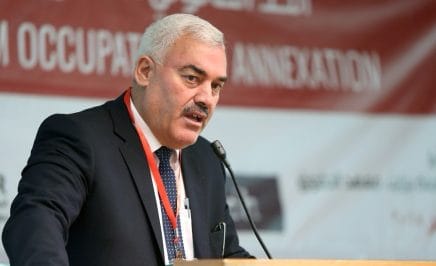
“We are confronting the most challenging moment of our age. Humanity is under attack from transnational anti-rights movements and predatory governments determined to assert their dominance through unlawful wars and brazen economic blackmail,” said Agnès Callamard, Secretary General of Amnesty International.
“World leaders have been far too submissive in the face of attacks on international law and the multilateral system. Their silence and inaction are inexcusable.”
Agnès Callamard, Secretary General of Amnesty International
“The vast majority of states have been unwilling or unable to consistently denounce predatory acts by the USA, Russia, Israel or China, or to chisel out diplomatic solutions.
“World leaders have been far too submissive in the face of attacks on international law and the multilateral system. Their silence and inaction are inexcusable. It is morally bankrupt and will bring nothing but retreat, defeat and the erasure of decades of hard-fought human rights gains.
“To appease aggressors is to pour fuel on a fire that will burn us all and scorch the future for generations to come,” said Agnès Callamard.
Australia’s human rights record under scrutiny
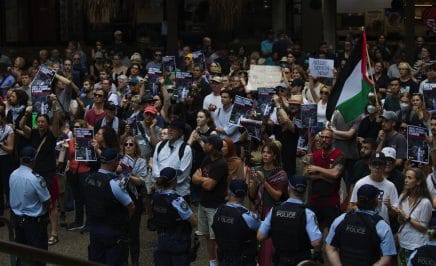
In Australia, as people took to the streets in 2025 and early 2026 to protest genocide and other grave human rights violations, the introduction of anti-protest laws restricting fundamental civil and political rights, coupled with an increase in police brutality in their enforcement, reflected a growing disregard for international human rights standards and the rules-based order.
Australia has also continued to supply arms and components to countries implicated in genocide, war crimes and crimes against humanity, including through its role in the global supply chain for the F-35 fighter jet.
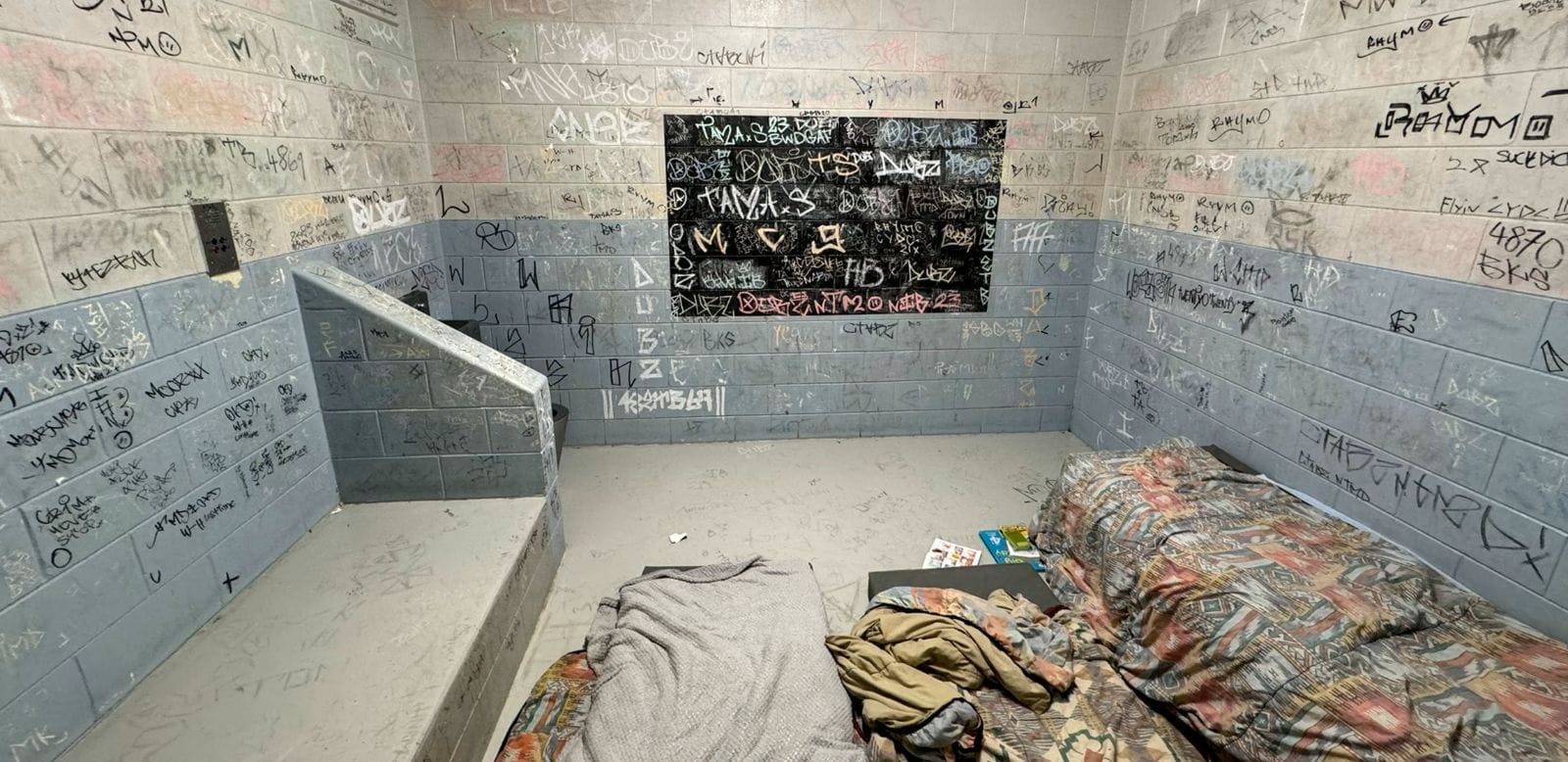
Hate and division have intensified, highlighted by the Bondi attack that claimed 15 lives, alongside the proliferation of dangerous and racist rhetoric from political leaders targeting specific communities. Aboriginal and Torres Strait Islander Peoples experienced ongoing discrimination and cycles of systemic violence, as well as the continued imprisonment of children as young as 10.
In December, children under 16 were prohibited from holding or opening accounts on certain social media platforms, raising serious concerns about the protection of freedom of expression online.
Meanwhile, new laws have enabled the deportation and offshore detention of people seeking asylum, including in facilities such as Nauru, while the government has continued to approve fossil fuel projects, further entrenching Australia’s role as a major fossil fuel producer.
Predatory attacks are accelerating the destruction of international law
The State of the World’s Human Rights, and Amnesty International’s documentation so far this year, detail pervasive crimes under international law and mounting attacks on the international justice system, which are gravely harming the foundations that underpin human rights globally.
Israel has maintained its genocide against Palestinians in Gaza, despite the October 2025 ceasefire agreement, and its system of apartheid over Palestinians, while accelerating the expansion of illegal settlements in the occupied West Bank, including East Jerusalem, and taking steps toward annexation.
Israeli authorities have increasingly allowed or encouraged settlers to attack and terrorize Palestinians with impunity, and prominent officials have praised and glorified violence against Palestinians, including arbitrary arrests and the torture of detainees.
The United States of America has committed over 150 extrajudicial executions by bombing boats in the Caribbean and the Pacific, and carried out an act of aggression against Venezuela in January 2026. Russia has intensified its aerial attacks on critical civilian infrastructure in Ukraine, while Myanmar’s military used motorized paragliders to drop explosive munitions on villages last year, killing dozens of civilians, including children.
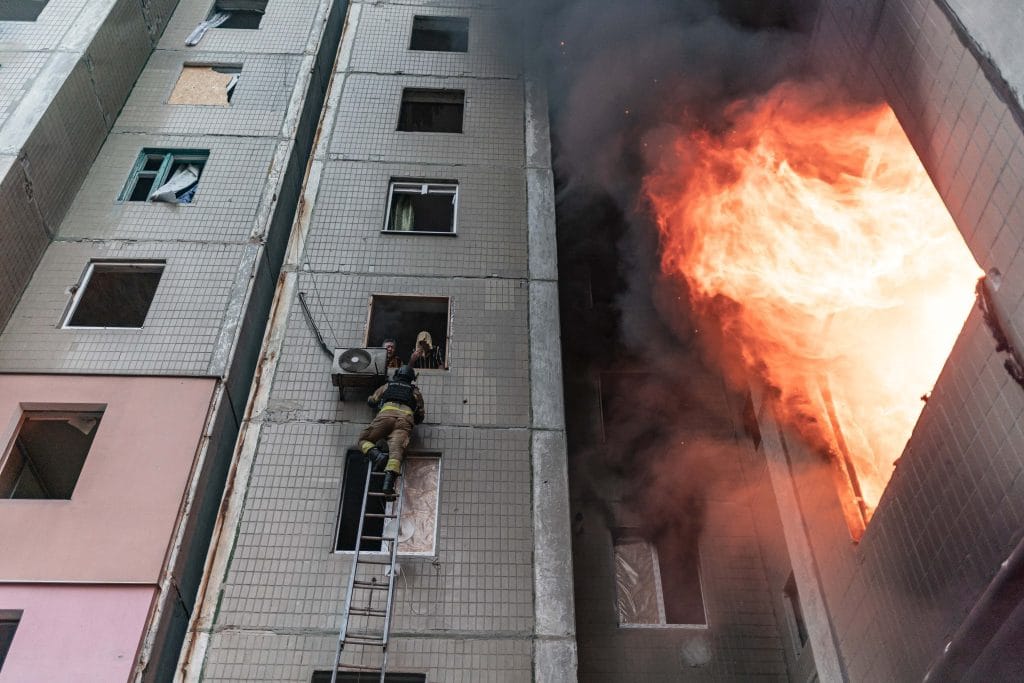
In early 2026, the USA and Israel’s unlawful use of force against Iran, in violation of the UN Charter, has triggered retaliatory Iranian strikes on Israel and Gulf Cooperation Council countries, while Israel has escalated its attacks on Lebanon.
From the killing of over 100 children in an unlawful US strike on a school in Iran, to the devastating attacks by all parties on energy infrastructure, the conflict has endangered the lives and health of millions of civilians and threatens to inflict vast, predictable and long-term civilian and environmental harm, impacting access to energy, healthcare, food and water across an already turbulent region and beyond.
In Afghanistan, the Taliban escalated its predatory policies against the female population, with further bans prohibiting them from education, work and freedom of movement, while in Iran, the authorities massacred protesters in January 2026, in what was likely the most lethal such repression for decades.
Ramped-up assaults on civil society spread around the world
The proliferation of attacks on civil society and social movements deepened in 2025, with sustained efforts to silence and disempower human rights defenders, organizations and dissenters spreading to almost every part of the world.
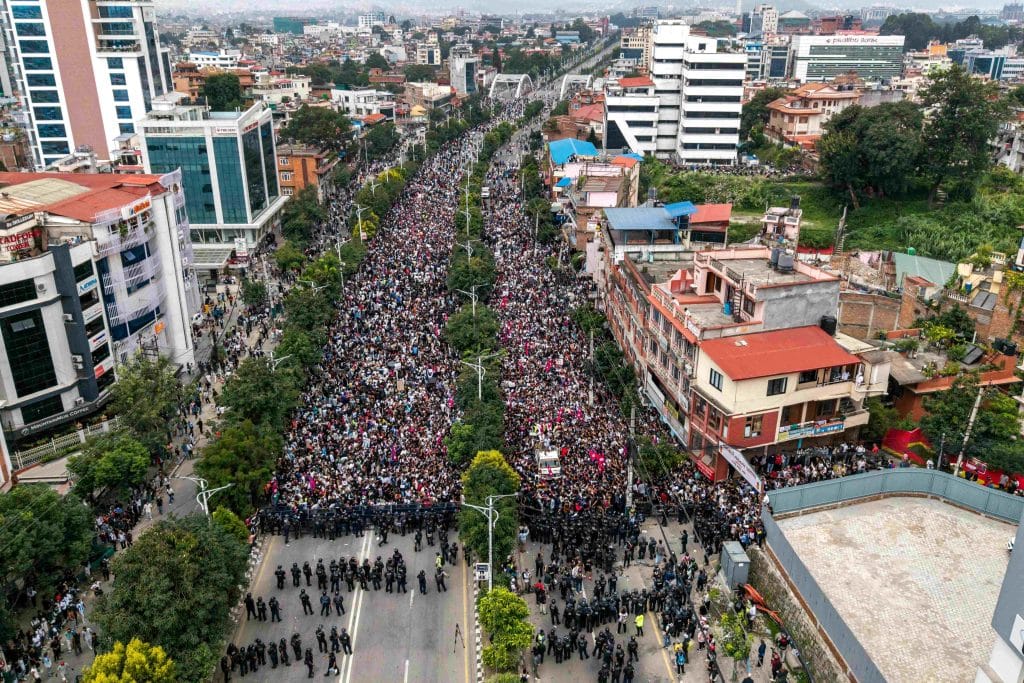
Authorities in Nepal and Tanzania were particularly brazen in their unlawful use of lethal force to repress protests expressing political and socio-economic grievances. The governments of Afghanistan, China, Egypt, India, Kenya, the USA and Venezuela, among others, also violently repressed protests, criminalized dissent through counterterrorism and security laws, or used abusive policing tactics, enforced disappearances or extrajudicial executions.
US authorities launched an unlawful clampdown on migrants, refugees and asylum seekers, committing unnecessary and excessive use of force, racial profiling, arbitrary detention, and practices that amounted to torture and enforced disappearance. In Latin America, states such as Ecuador, El Salvador, Nicaragua, Paraguay, Peru and Venezuela adopted or reformed legal frameworks that impose disproportionate controls on civil society organizations directly impacting their ability to operate, access resources, support communities and defend human rights.
In a context dominated by the US president describing climate change as a “scam”, governments did nowhere near enough to address climate displacement, equitably transition away from fossil fuels, or adequately ramp up finance for climate action – even as the UN Environment Programme warned that the world is on track to reach 3°C above pre-industrial levels by 2100.
Protesters, civil society and international bodies lead efforts to resist, disrupt and transform
Undeterred by adversity, millions around the world are resisting injustice and authoritarian practices.
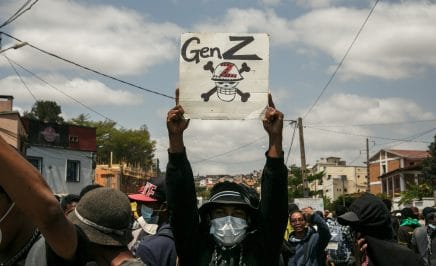
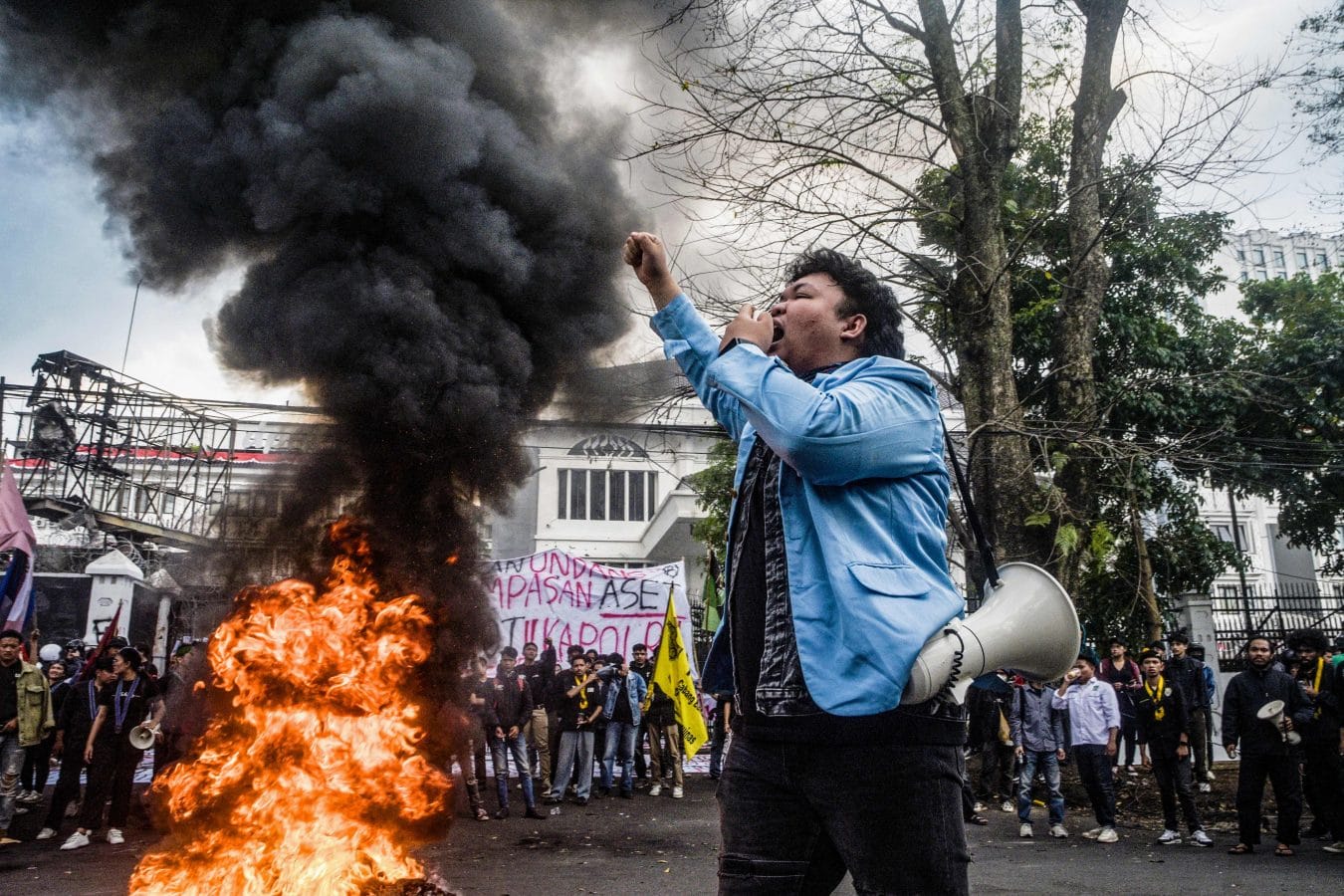
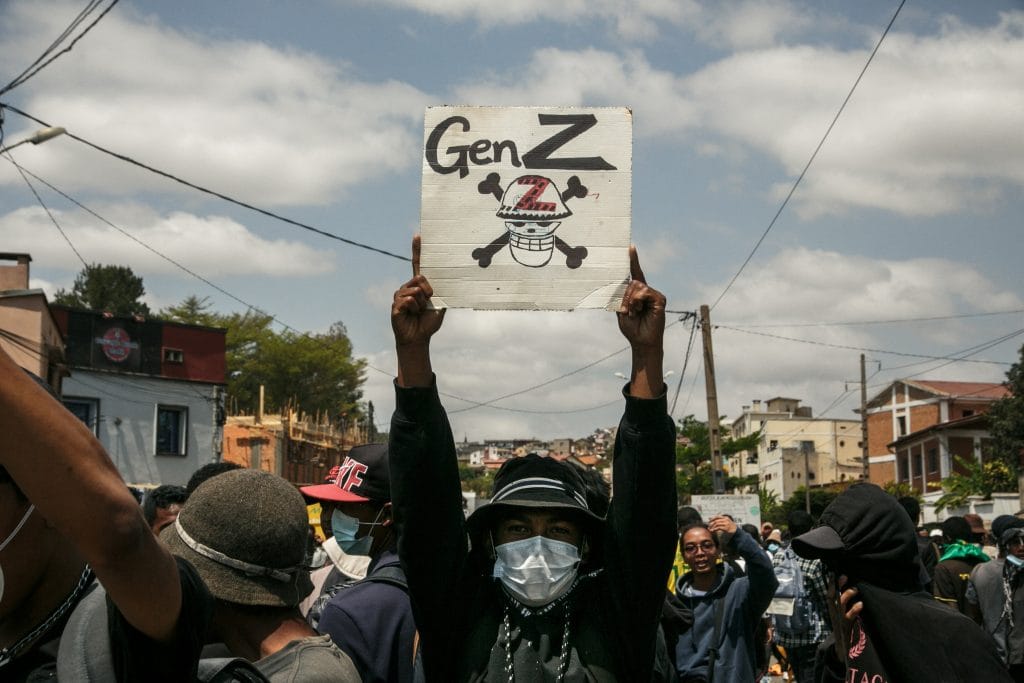
Gen Z protests swept over a dozen countries in 2025, including Indonesia, Kenya, Madagascar, Morocco, Nepal and Peru, and around 300,000 people defied Hungary’s ban on Budapest Pride to defend LGBTI rights. Throughout early 2026, demonstrators from Los Angeles to Minneapolis have organized street by street and block by block against violent and highly militarized US immigration enforcement raids.
Mass demonstrations against Israel’s genocide spread around the world last year and humanitarians from over 40 countries launched flotillas to show solidarity with Palestinians. Global activism against the flow of arms to Israel expanded, with dockworkers in France, Greece, Italy, Morocco, Spain and Sweden seeking to disrupt arms shipment routes. Activism and legal pressure also led several states to restrict or ban arms exports to Israel.
More states have started speaking out against authoritarian practices and attacks on the rules-based order in 2026, with the Spanish government notably taking principled stands, but such calls must be backed up with decisive and sustained action.
“From city streets to multilateral forums, 2025 brought powerful displays of resistance and solidarity from protesters, diplomats, political leaders and many others around the world. We must build on their example and courage and forge bold coalitions to reimagine, rebuild and re-centre the global order around human rights, the rule of law and universal values,” said Agnès Callamard.
“For the sake of humanity, the time to make history is now.”
Agnès Callamard
“Let 2026 be the year we assert our agency and demonstrate that history is not merely something imposed upon us; it is ours to make. And for the sake of humanity, the time to make history is now.”
Head to Amnesty Australia’s Instagram to learn more.
Amnesty International is a global movement of more than 10 million people who take injustice personally. We are campaigning for a world where human rights are enjoyed by all – and we can only do it with your support.
Act now or learn more about our human rights work.