Lawyer Kacey Keeton details problems with the criminal justice system in Alabama
In 2007, Kacey Keeton, a 49-year-old lawyer from Alabama, was assigned the case of Rocky Myers, a...
Read More

We know that, together, we can end the death penalty everywhere.
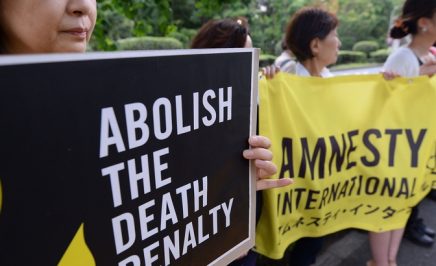
Whatever form it takes – hanging, lethal injection, beheading, stoning or electrocution – the death penalty is a violent punishment that has no place in today’s criminal justice system.
Read More
When Amnesty started campaigning against the death penalty back in 1977, only 16 countries had abolished it. As of December 2022, 112 countries have abolished the death penalty for all crimes and another 32 countries no longer perform executions.
Unfortunately while the abolitionist movement has made significant progress over that time, the countries that still execute are doing so at alarming rates.
There’s no scientific evidence to show that the death penalty deters crime any more than other punishments.
Crime figures from abolitionist countries show that ending the death penalty is not followed by a spike in crime. In fact, in Canada the homicide rate in 2015 is almost half that in 1976, the year the death penalty was abolished there.
The death penalty is irreversible. All legal systems make mistakes, and so as long as the death penalty exists, innocent people will be executed.
In the USA, 151 people have been released from death rows since 1973 due to evidence of their wrongful convictions. Some of them had spent many years on death row and had come close to being executed.
Research has shown that people have been sentenced to death after being tortured into ‘confessing’ to crimes, and after unfair or politically-motivated trials.
The death penalty is often used disproportionately against the poor, powerless and marginalised, or by repressive governments to eliminate or silence dissent.
International human rights treaties prohibit courts sentencing to death or executing anyone who was under the age of 18 at the time the crime was committed. But a small number of countries continue to execute child offenders.
We know of nine countries since 1990 that have executed prisoners who were under 18 at the time the crime was committed – China, the Democratic Republic of the Congo, Iran, Nigeria, Pakistan, Saudi Arabia, Sudan, the United States of America and Yemen. Several of these countries have since changed their laws to exclude the practice.
In the wake of 2015’s executions in Indonesia, Amnesty and a number of human rights organisations released a joint paper, which outlined a number of steps the Australian government should take to effectively campaign against the death penalty worldwide. Thousands of Amnesty supporters signed a petition echoing these calls.
Following our petition, the Australian government asked the Parliament to launch an inquiry into what Australia could do in the worldwide campaign against the death penalty. In May 2016, the Parliamentary Committee released its report, A world without the death penalty – Australian’s Advocacy for the Abolition of the Death Penalty, containing a number of recommendations to the Australian government – many of which Amnesty has been calling for.
Importantly, the report called for changes to the way the Australian Federal Police (AFP) shares information with its international counterparts. The Committee recommends that for drug-related crimes, the AFP should never share information unless they’ve received a commitment that the death penalty will not be pursued.
The report also called on Australia to play a leading role at the United Nations in advocating for worldwide abolition, and for Australia to directly pressure countries which still practice capital punishment.
In March 2017, the Australian government provided its response to the recommendations of the report. The response made some positive steps, but it also contained setbacks. While the Australian government committed to a whole of government strategy of advocating against the death penalty, it rejected the recommendations related to when law enforcement can share information on drug-related crimes. Had they been followed, these recommendations would have closed the door on another Bali 9-type situation ever occurring again.
Close
Twenty countries across the world are known to have carried out executions in 2022.
Read MoreAccording to Amnesty’s latest annual report, a total of 883 people were known to have been executed across 20 countries in 2022 — this is a rise of 53% since 2021.
This spike in executions, which does not include the thousands believed to have been carried out in China last year, was led by countries in the Middle East and North Africa.
The fight for a world without the death penalty must continue. Amnesty International opposes the death penalty in all cases without exception.
Read More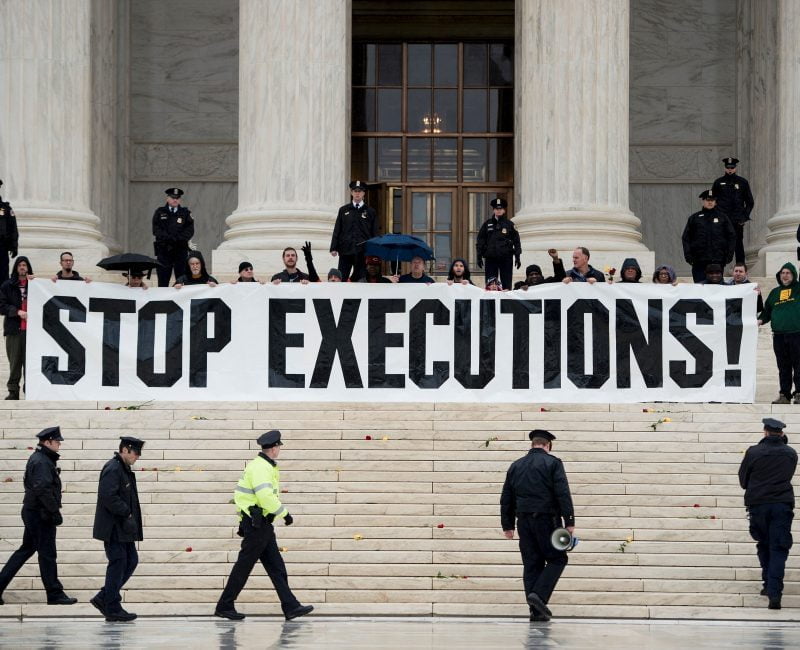
In 1977, when Amnesty International started campaigning against the death penalty, only 16 countries had abolished it. Now, there are 112 countries who have abolished it from their laws, and another 32 counties who no longer perform executions and are making positive step towards full abolition.
The trend towards abolition remains strong but we must continue to pressure governments in countries where the death penalty still exists, until universal abolition is realised.
Will you join us?
Close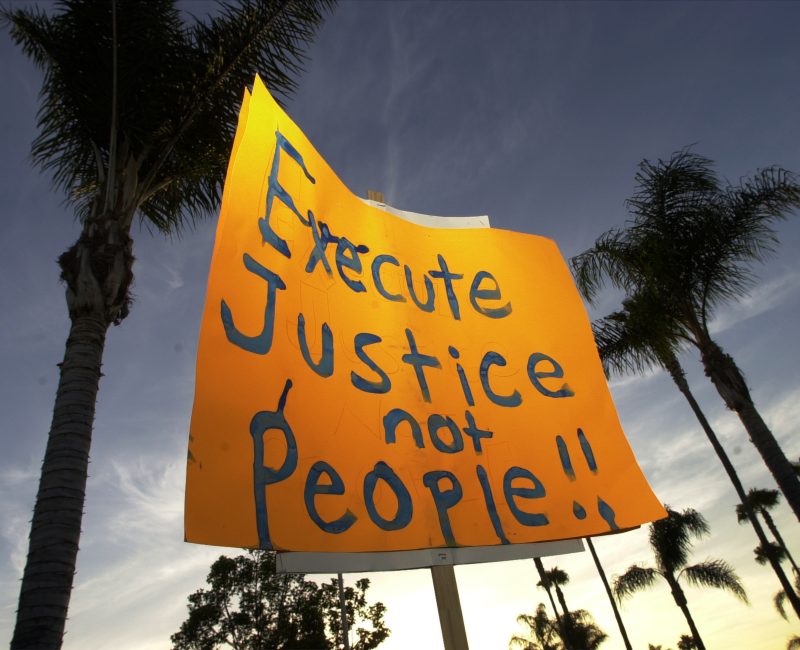
According to Amnesty International's latest annual report, executions have skyrocketed to the highest figure in five years in 2022.
Read MoreAccording to Amnesty’s latest annual report, the number of people known to have been executed worldwide skyrocketed to the highest figure in five years.
In 2022, there were a recorded 883 executions in 20 countries – a 53% increase from 579 recorded in the year before – including a significant increase in executions for drug-related offences.
In Asia-Pacific, eight countries (Afghanistan, Bangladesh, China, Japan, Myanmar, North Korea, Singapore and Vietnam) are known to have carried out executions in 2022, an increase from five countries in 2021.
“As a global leader in the fight against the death penalty, Australia must bring a new level of commitment and focus, especially in the Asia Pacific region and towards countries resuming and increasing executions.”
— Rose Kulak, Amnesty International Australia Campaigner
CloseDespite record-breaking numbers in 2022, there was also progress. Each and every day we come closer to a world without the death penalty.
Read More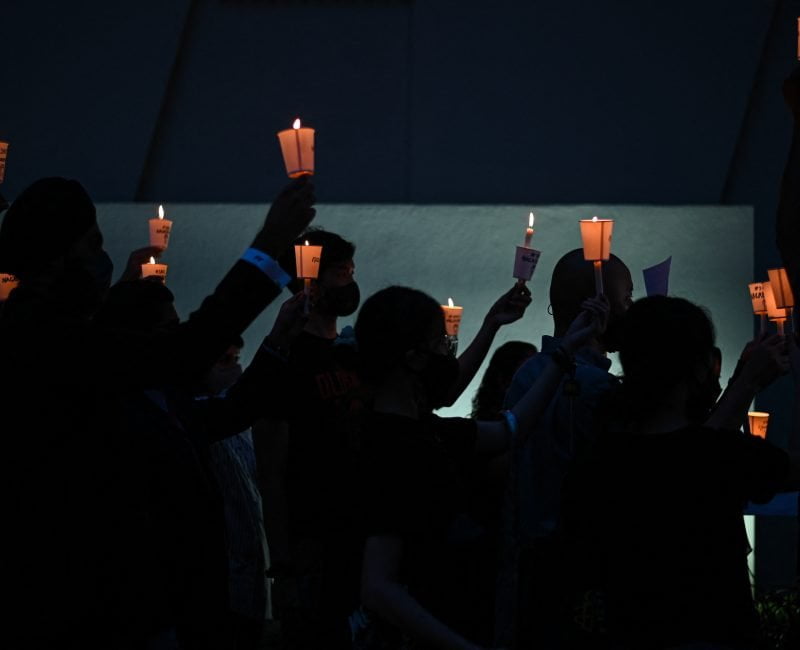
The record figures in 2022 from our latest annual report should act as a warning that it is not yet time to let off pressure.
Despite a record-breaking number of executions recorded globally, there was also progress. The world continued to move away from the death penalty and only a minority of countries – that are increasingly becoming isolated – actively used the punishment.
The death penalty is currently abolished in more than half of the world – 112 countries have abolished it from their laws and another 32 counties no longer perform executions.
“With 125 UN member states — more than ever before — calling for a moratorium on executions, Amnesty International has never felt more hopeful that this abhorrent punishment can and will be relegated to the annals of history. But 2022’s tragic figures remind us that we can’t rest on our laurels. We will continue to campaign until the death penalty is abolished across the globe.”
— Agnès Callamard, Amnesty International’s Secretary General
We must continue the momentum. Together, we can end the death penalty everywhere.
CloseYour regular gift can help save the life of someone on death row and fund vital work to abolish the death penalty worldwide.